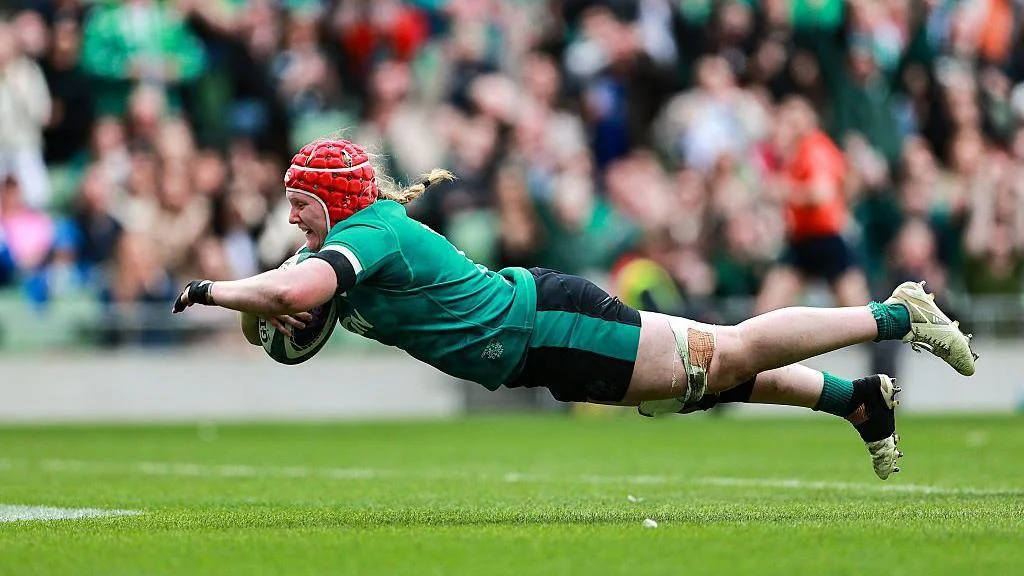
Ireland's emphatic 54-5 victory over Scotland not only marks a significant achievement in the women’s Six Nations Championship but also highlights the growing visibility and appeal of women’s rugby. This match, played in front of a record crowd of 31,294 at the Aviva Stadium, underlines both Ireland's dominance and the increasing interest in the sport. The sizeable attendance isn't just a number; it reflects a changing attitude toward women's sports, typically overshadowed by their male counterparts. Time and time again, events like this show that spectators are hungry for more opportunities to watch women's athletics at the elite level.
Game Dynamics and Key Performers
The outcome underscores a standout performance, particularly in the first half, where Ireland scored an impressive 47 points. Early on, Ireland displayed a skillful balance of power and strategy that left Scotland struggling to gain any traction. Key players like Cliodhna Moloney-MacDonald, who initiated the scoring with a try from a driving maul, and Aoife Wafer, who delivered two tries, showcased their prowess and solidified their places in the annals of Irish rugby. Wafer in particular, awarded Player of the Match for her contributions, adds depth to the narrative around emerging talents in women’s rugby. This isn't just another game; it's carving a pathway for future stars.
Robyn O'Connor and Brittany Hogan also played pivotal roles, with O'Connor’s skill at evading defenders leading to another try that extended Ireland's lead. Each of these players illustrated the increasing skill and athleticism within women's rugby, contributing to a performance that not only satisfied fans but also showcased tactical evolution. The aggressive attacking style didn't just work; it overwhelmed a Scotland side that struggled to adapt. Hogan’s two tries emphasized her powerful presence on the field, reminiscent of the top players in men’s rugby, laying bare the talent pool that the women's game has to offer.
Context and Implications
While the scoreline is an encouraging sign for Irish rugby, it raises serious questions about Scotland's trajectory in the tournament. Enduring their fourth consecutive defeat, Scotland found themselves unable to match Ireland’s intensity or fully exploit gaps in their defense. This poses significant implications for their development and future competitive viability. The alarming frequency of penalties that Scotland conceded shows that tactical discipline remains a pressing issue. These coaching gaps signify a need for change, and Scott Bemand has to address them quickly. Scotland managed to score a consolation try courtesy of Aicha Sutcliffe, but that was too little to change the match context, and the missed opportunities to secure more points eat away at their confidence.
From a broader perspective, this match serves as a strategic point in women’s rugby regarding audience engagement. With record attendance signaling an appetite for high-quality rugby among fans, the implications for investment and resource allocation are apparent. Interested spectators are a signal to sponsors and stakeholders that there’s potential for financial growth. The numbers don't lie; as interest in women's rugby rises, so does the potential for the women’s game to carve out its niche within a sports ecosystem traditionally dominated by men’s versions of these sports.
Looking Ahead
The match's outcome poses a pivotal moment for both teams as they prepare for future competitions. For Ireland, building on this performance is imperative as they aim for greater consistency and success on the international stage. The collective effort and standout individuals from this face-off set a strong precedent, but sustaining this momentum is key. Looking ahead, Ireland's third-place finish, buoyed by three home victories, offers them a solid foundation to build upon as they set their sights on the next Six Nations season. That consistency and development will be necessary if they hope to challenge higher-ranked teams moving forward.
For Scotland, the road ahead looks steep unless they engage in a comprehensive review and strategic recalibration of their approach. What this means for you, the reader, especially if you’re working in this space, is simple: the challenge will be recognizing the unrealized potential within the squad. Their final season performance could serve as a crucial learning experience, prompting them to enhance not only their tactical execution but also their resilience on the field. Because without a significant shift, they risk becoming mired as underdogs rather than front-runners in a competitive sport.
Future Outlook: What Lies Ahead for Women's Rugby
Looking to the future, the implications of Ireland's victory extend beyond mere statistics. This match is more than a single event; it could signal a turning point for women's rugby, particularly as other nations follow Ireland's lead in support and investment. As more fans fill stadiums for women’s matches, the spotlight will grow on athletes who might otherwise go unnoticed. Gender equity in sports is still a hot topic, and every record attendance nudges the conversation forward.
Furthermore, the performance of emerging talents, like Aoife Wafer and her ilk, paves the way for the next generation. The narrative surrounding women’s rugby is evolving, and a winning Irish team adds compelling stories and characters that fans can rally behind. The road might be challenging for teams at the bottom of the table, but the framework for a more balanced competitive field is taking shape. And this is the part most people overlook: it’s the experiences of teams like Scotland that ultimately contribute to the depth and rivalry that enrich the sport.