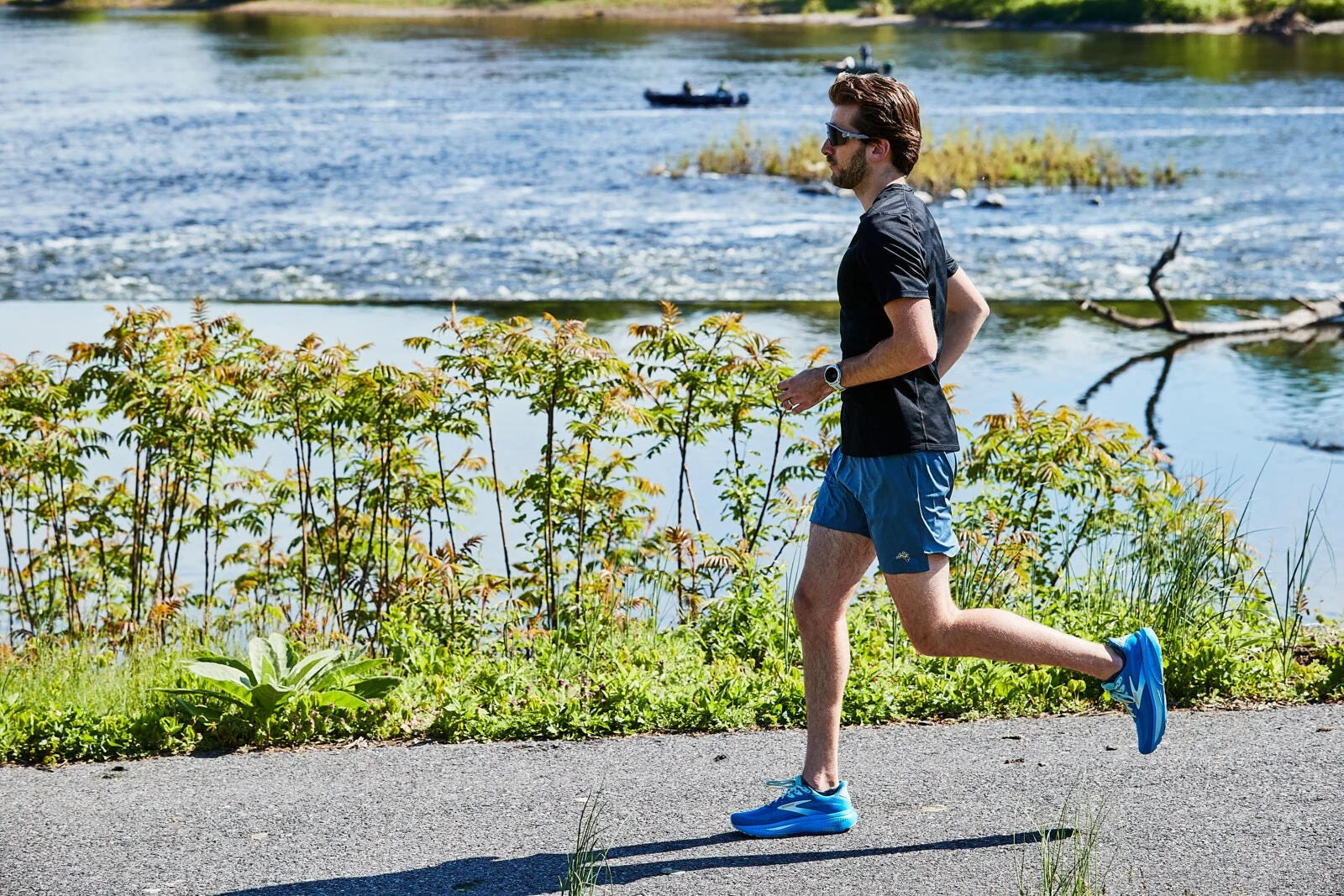
If you’re consistently training, staying healthy, and improving year after year, you may not need major changes to your running form. But when you’re chasing bigger goals—a PR, a Boston qualifier, or simply another level of performance—small details begin to matter more.
At higher speeds and longer distances, even subtle inefficiencies can drain energy and make it harder to sustain pace late in a race. The goal at this level isn’t to rebuild your stride. It’s to refine what already works and improve efficiency without sacrificing consistency or durability.
With the help of clinical exercise physiologist Heather Milton, The Runner’s World Guide to Running Form is here to help fine-tune every runner’s stride—even those who have been earning postrace medals for decades.
What You’ll Learn
In the The Runner’s World Guide to Running Form: PR Chaser, we’ll teach you:
- How vertical oscillation wastes energy and slows race pace
- Why exaggerated arm movement can disrupt efficiency and stability
- How knee alignment affects injury risk
- The connection between cadence, turnover, and running economy
- Which drills improve efficiency without disrupting what already works
Watch Video
Go Deeper
What We Notice
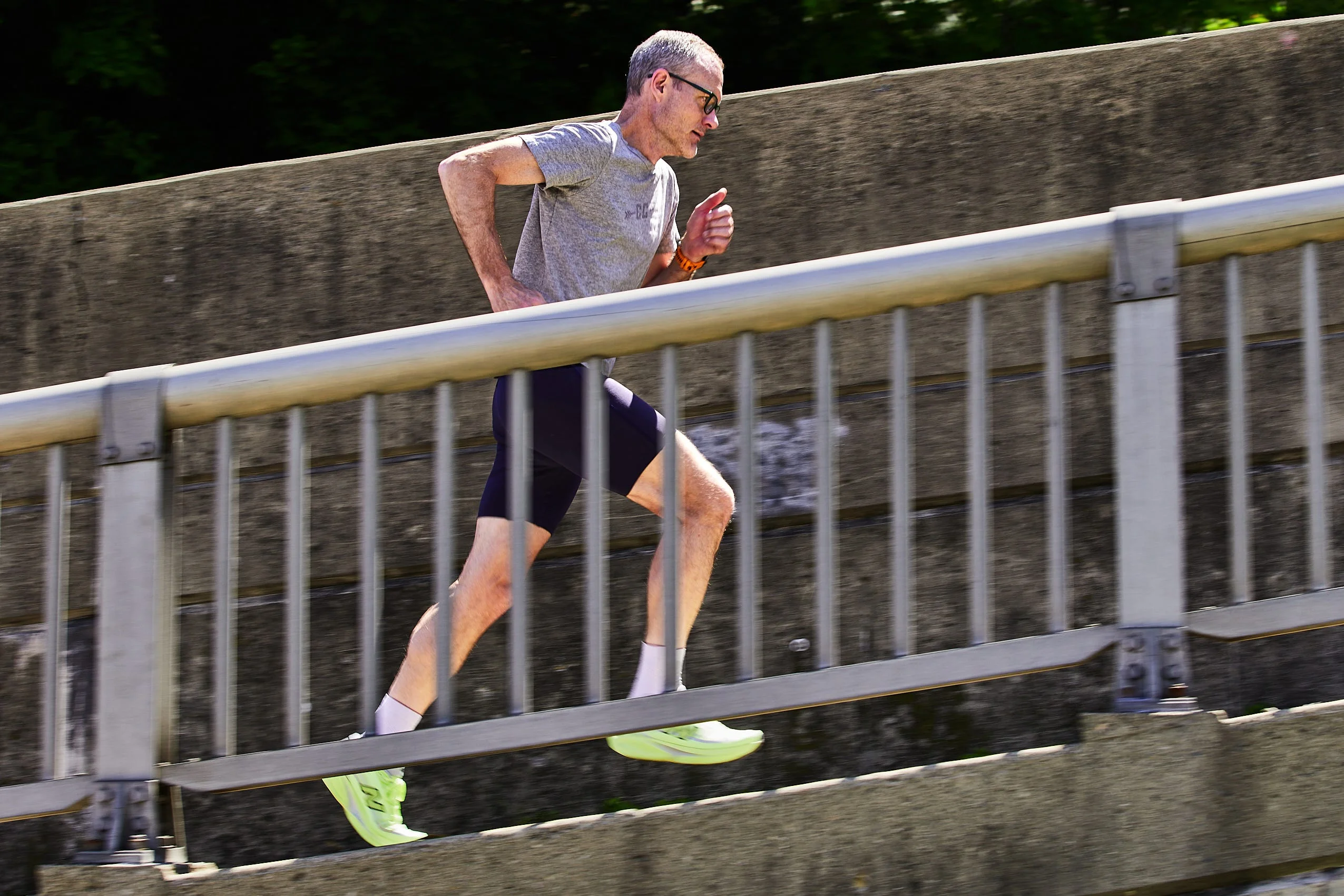
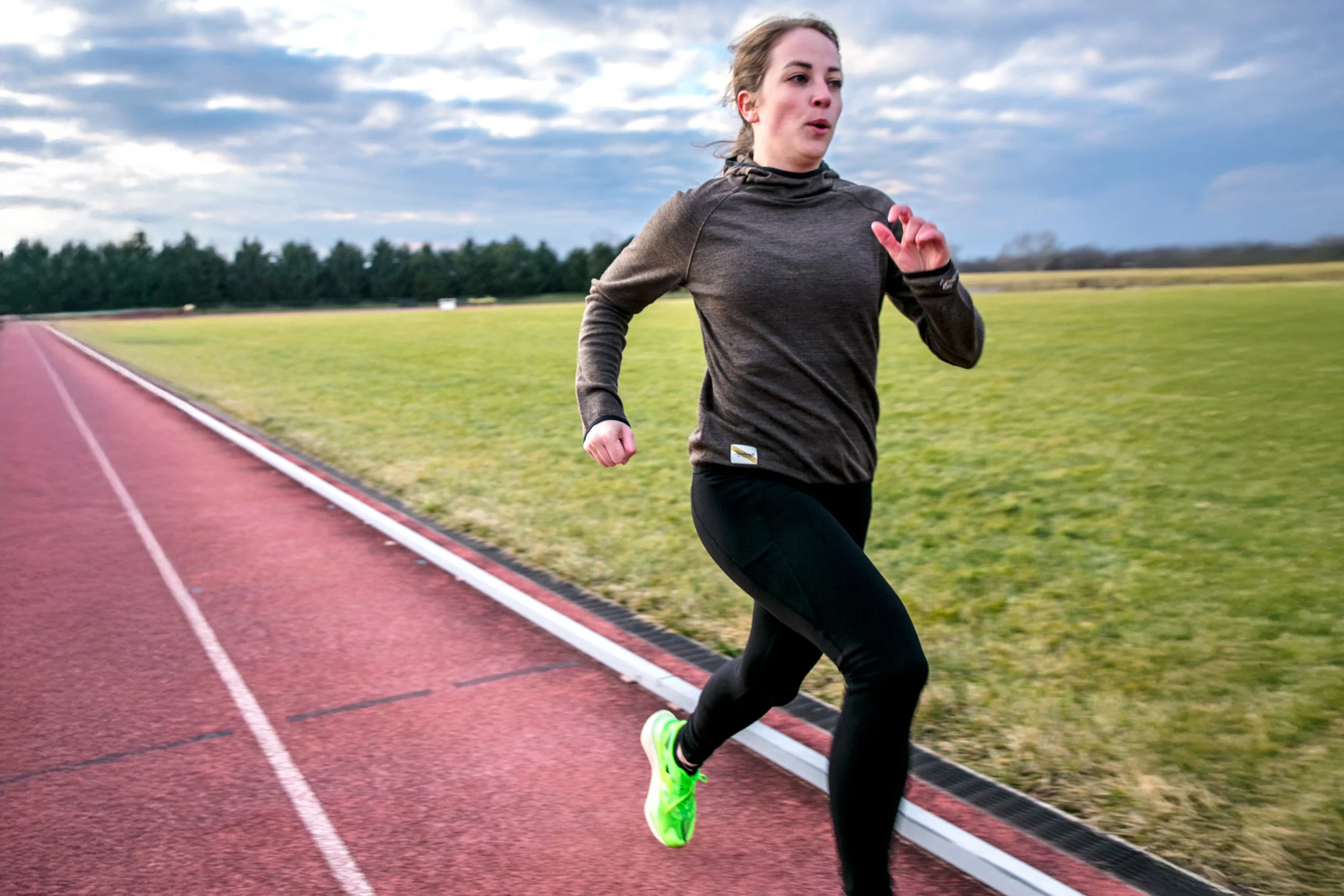
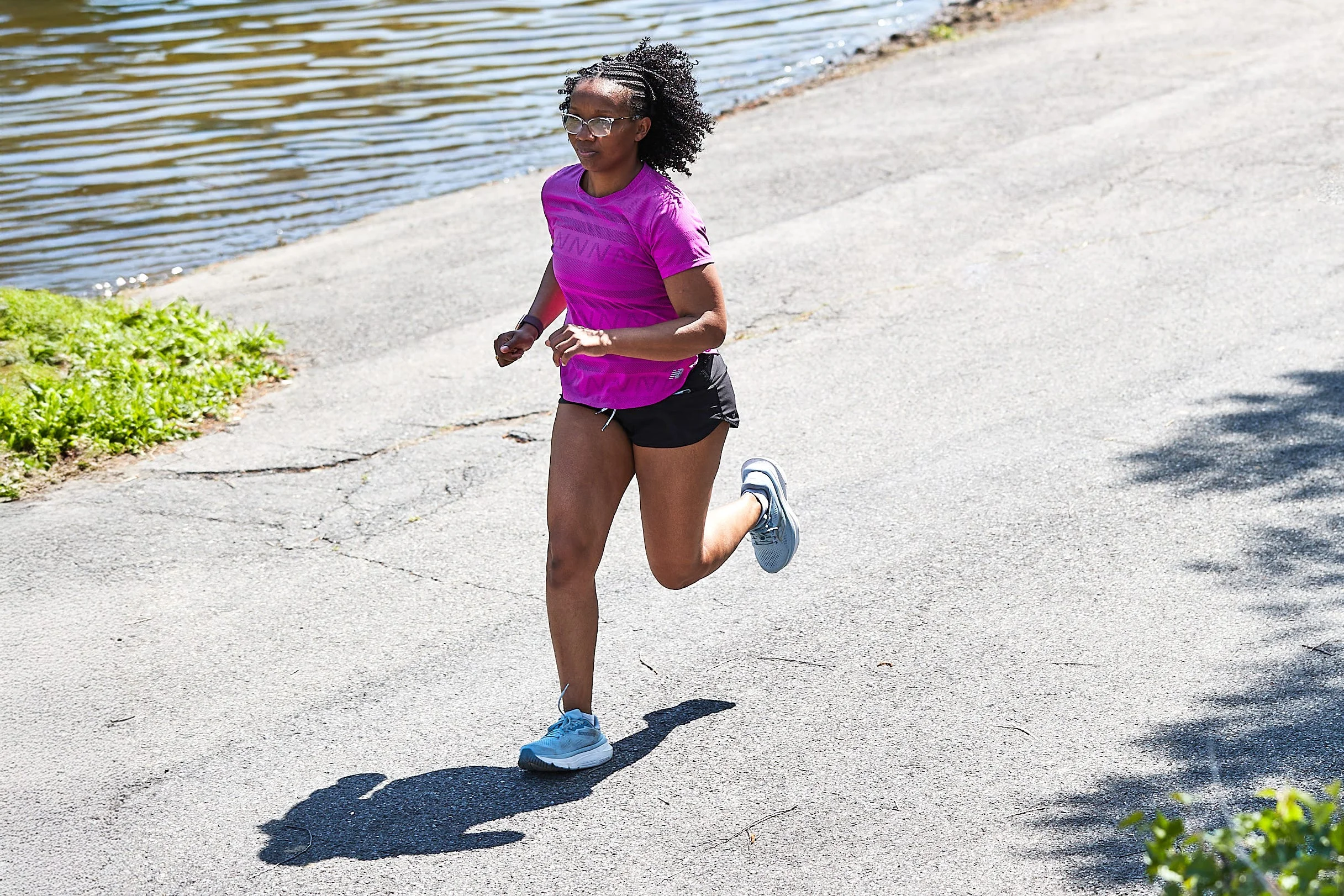
When evaluating strong, experienced runners, we’re usually looking for smaller movement patterns that quietly affect running economy and repeatability under fatigue.
🚩 Vertical Oscillation (Bounding)
Instead of directing force forward, too much energy is spent lifting the body vertically. This “bounding” pattern often comes from trying to create a more powerful push-off without effectively using the glutes and forward lean.
🚩 Low Hip Extension at Push-Off
Efficient runners generate strong propulsion behind the body. Limited hip extension can reduce stride efficiency and decrease the ability to use the glutes effectively during push-off.
🚩 Exaggerated Arm Swing
Large arm movements—especially extending and rebending the elbows aggressively—can increase vertical motion and waste energy.
🚩 Knee Valgus
Some runners allow the knees to collapse inward during stance phase. Mild valgus may not cause immediate problems, but under higher mileage and race fatigue, it can increase stress on the knees, hips, and surrounding tissues.
What We Can Correct
For experienced runners, changes should feel like refinements—not complete rebuilds. The best adjustments improve economy while preserving the natural rhythm and strengths the runner already has.
💡 Reduce Vertical Oscillation
Some runners respond well to visual cues—like focusing on keeping the horizon line steady while running. Others benefit from slightly increasing cadence, which reduces flight time and encourages quicker turnover. While it’s not a magic number, working toward a cadence closer to 180 steps per minute improves rhythm and energy return without forcing major stride changes.
💡 Improve Arm Swing Efficiency
Keeping the elbows bent near 90 degrees and allowing the arms to swing naturally from the shoulders helps stabilize the torso and direct force forward. Efficient arm swing should stay compact and controlled.
💡 Strengthen Hip Stability
Exercises like lateral band walks and standing clamshells strengthen the external hip rotators, helping control knee alignment and reduce collapse inward during stance.
Hip thrusts help improve glute strength and power production during push-off, supporting better stride efficiency and energy transfer.
💡 Train Better Knee Alignment
Walking lunges with proper knee tracking reinforce stronger movement patterns and improve lower-body control under load.

Brian has spent more than a decade focused on creating compelling news, health, and fitness content—with a particular interest on enthusiast activities like running and cycling. He’s coordinated coverage of major events like the Paris Olympics, Boston Marathon, New York City Marathon, and Tour de France, with an eye toward both the professional race and the engaging stories readers love.