There’s a reason almost everyone on the Runner’s World team wears a Garmin—and not just for long runs. Reasons span far beyond the company's history of making watches built specifically for runners and multisport athletes.
It’s the fact that they have inbuilt precision data and battery life that’s measured in days or weeks, instead of hours, into lightweight, easy-to-operate, insight-driven machines that just work. Yes, they can be pricey, and yes, your morning report may feel like the seventh grade gym teacher who bullied you, but overall, they are nearly impossible to beat, and as someone who tests running watches for a living, I’ve yet to find its superior.
Every single Garmin on this list has logged real runs on my wrist through every conceivable condition short of running in outer space. I’ve worn them on tempo days, track days, and those runs that last so long you start hallucinating armadillos in upstate New York. That firsthand testing matters, because not every watch is for every runner; the right one depends on how you train, how you recover, and how deep you want to dive into your data.
Best Garmin Running Watches
- Best Overall: Garmin Forerunner 265 Running Watch
- Best Value: Garmin Forerunner 55 Running Watch
- Best for Road Navigation: Garmin Forerunner 970
- Best Budget Road Navigation: Garmin Forerunner 570
- Best for Ultrarunners: Garmin Enduro 3
How We Selected
So how did these models make the list? I evaluated each watch on four key factors: performance tracking, battery life, durability, and value. Garmin dominates all four categories, but the mix of features and price varies widely. My goal here is to match you with the Garmin that fits not just your mileage, but your mindset. Some runners crave marathon-level analytics; others just want accurate GPS and a watch that doesn’t die midrun. Garmin has a match for everyone. You just need to figure out your perfect Garmin.
One point that I must remark on—the Garmin Connect app still needs work. It’s clunky, tricky to navigate, and the store is an entirely separate app, which is needlessly frustrating when you just want to purchase your $2 Fourth Wing watchface and install it in the same app.
Also, the Garmin Connect challenges aren’t quite as fun or fleshed out as the challenges in the Strava app. Finally, I’d love for more fitness apps to link directly to Garmin. I love using my Ladder App, but they do not connect, so I have to track my strength training in free mode. (However, you can add modes to your Garmin, which I have done for house painting, because I was curious. Turns out, painting is a lot of cardio.)
Why Trust Us
At Runner’s World, we don’t just review gear; we live it. With decades of history serving the running community, we understand the unique needs of every runner, from beginners lacing up for their first mile to seasoned marathoners. Our commitment goes beyond casual interactions with the products. We’re dedicated to finding the best gear, meticulously testing each product in real-world conditions to ensure it meets our—and your—high standards.
Our team of experts, including Jeff Dengate, Amanda Furrer, and I, bring our extensive experience and passion for running to every review. We know that the right gear can make all the difference, and we’re here to help you find the perfect fit for your individual running journey. We put in the miles, so you can trust our recommendations are grounded in genuine experience and a deep understanding of what runners truly need.
Full Reviews

Pros
- Bright, easy-to-read AMOLED display
- Accurate dual-band GPS and heart-rate tracking
- Lightweight, comfortable design
- Excellent value for premium features

Cons
- Limited smartwatch app support
- No on-wrist calls or LTE option
- Battery drains faster with always-on display

Key Specs
| Connectivity | Bluetooth, USB, Wi-fi |
| Battery Life | 13 days, 20 hours fully-functional |
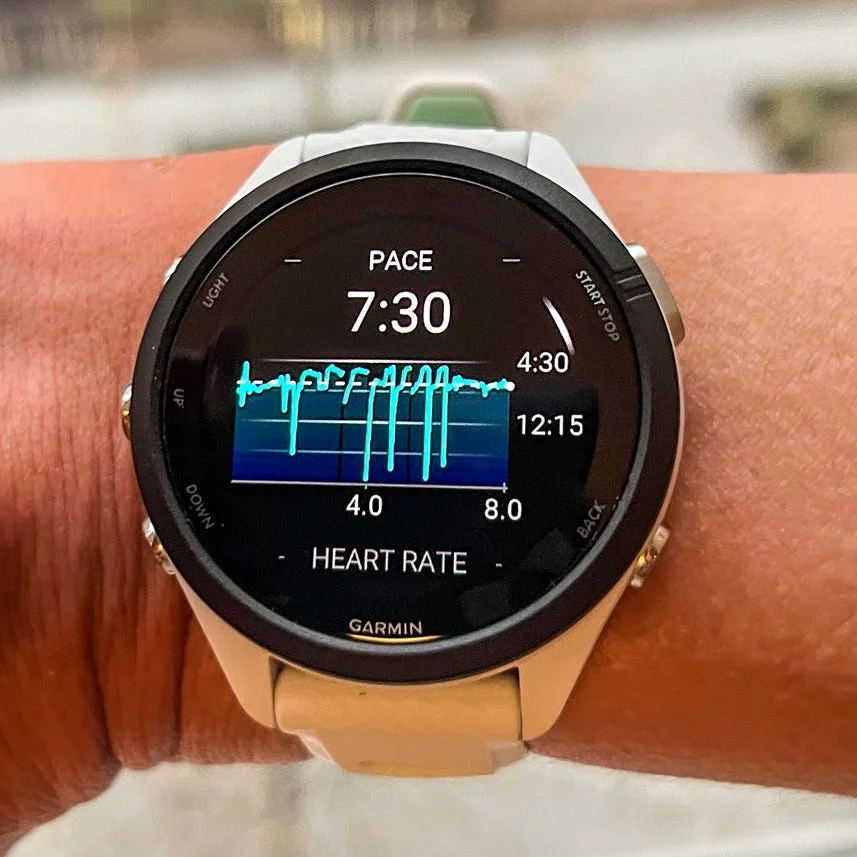
The Forerunner 265 is a true budget genius. From the moment I put it on, it felt like a solid watch—feeling light but sturdy enough for daily training. The AMOLED display is clear and bright, making pace checks and heart-rate glances readable and easy, even in direct sunlight.
You’ll love/hate the Garmin training readiness metrics—using sleep and recovery data to nudge (maybe shame) smarter rest days or pushing you to do more challenging workouts. Love it or hate it, you’ll check it every day. GPS was accurate, even below the giant New York City skyscrapers, which is hard to do. Heart-rate tracking stayed more accurate than traditional iOS or Android watches from recovery runs to all-out sprints.
Battery life stretched close to a full week, even with daily sessions and steady notifications. It feels built for serious runners who want reliable performance without a four-figure price tag. If you want a device that motivates you to move—and rewards you afterward—the 265 delivers.
Pros
- Fast GPS and rock-solid accuracy
- Impressive battery endurance (7+ days)
- Light, comfortable, versatile design
- Surprisingly smart training features
Cons
- No music storage or Garmin Pay
- Lacks dual-band GPS or wrist HRV
- Display feels basic next to AMOLED models
Key Specs
| Battery Life | Up to 14 days |
| Connectivity | Bluetooth, ANT+, USB |
| Connectivity | Bluetooth |
| Battery Life | 10 days, 12 hours fully functional |
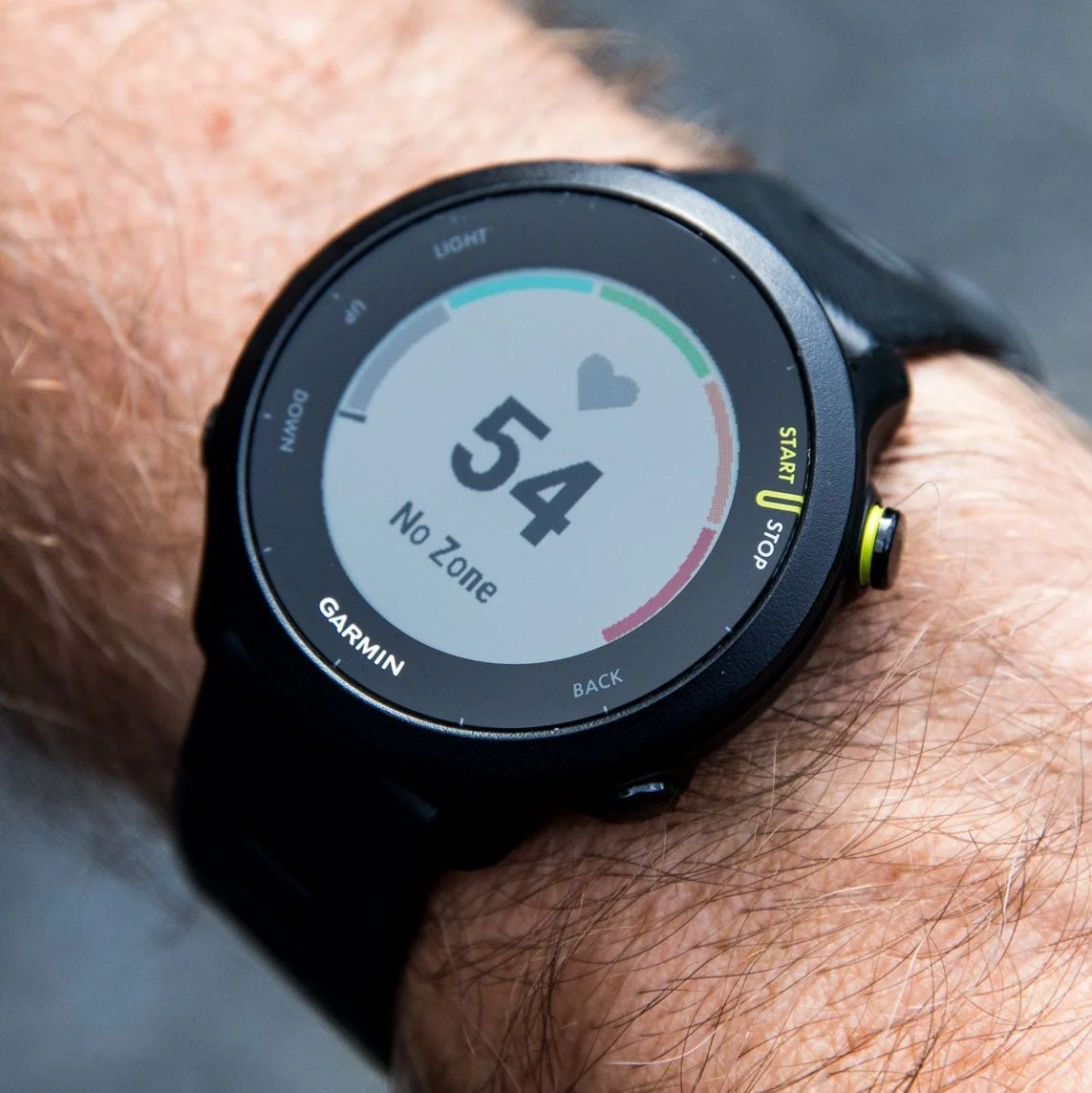
The Forerunner 55 proves you don’t need a flagship budget to get good running data. I recommend it constantly to newer runners because it nails Garmin’s essentials: fast, accurate GPS lock, useful daily workout suggestions, and a battery that just keeps going—easily a week on a single charge, even with regular training. I took it on my first 10K training run of the season, and it reminded me how refreshing simplicity can be. No constant scrolling, no fiddly excess menus. It’s basic in the best way.
Under the hood, it’s surprisingly capable. The heart-rate monitoring is steady and consistent, the GPS tracks are clean even on densely-populated urban routes, and Garmin’s algorithmic pacing guidance is helpful, even if it’s not perfect.
The Forerunner 55 is proof that practicality and performance can live happily together without emptying your wallet.
Pros
- Exceptional turn‑by‑turn navigation and dual‑frequency GPS
- Smart, accurate pace prediction and recovery insights
- Long 10‑day battery life with heavy training
- Gorgeous AMOLED display and smooth interface
Cons
- Slightly bulky on smaller wrists
- Data depth can overwhelm casual runners
Key Specs
| Connectivity | Bluetooth, Wi-fi, ANT+ |
| Battery Life | 10 days with heavy training |
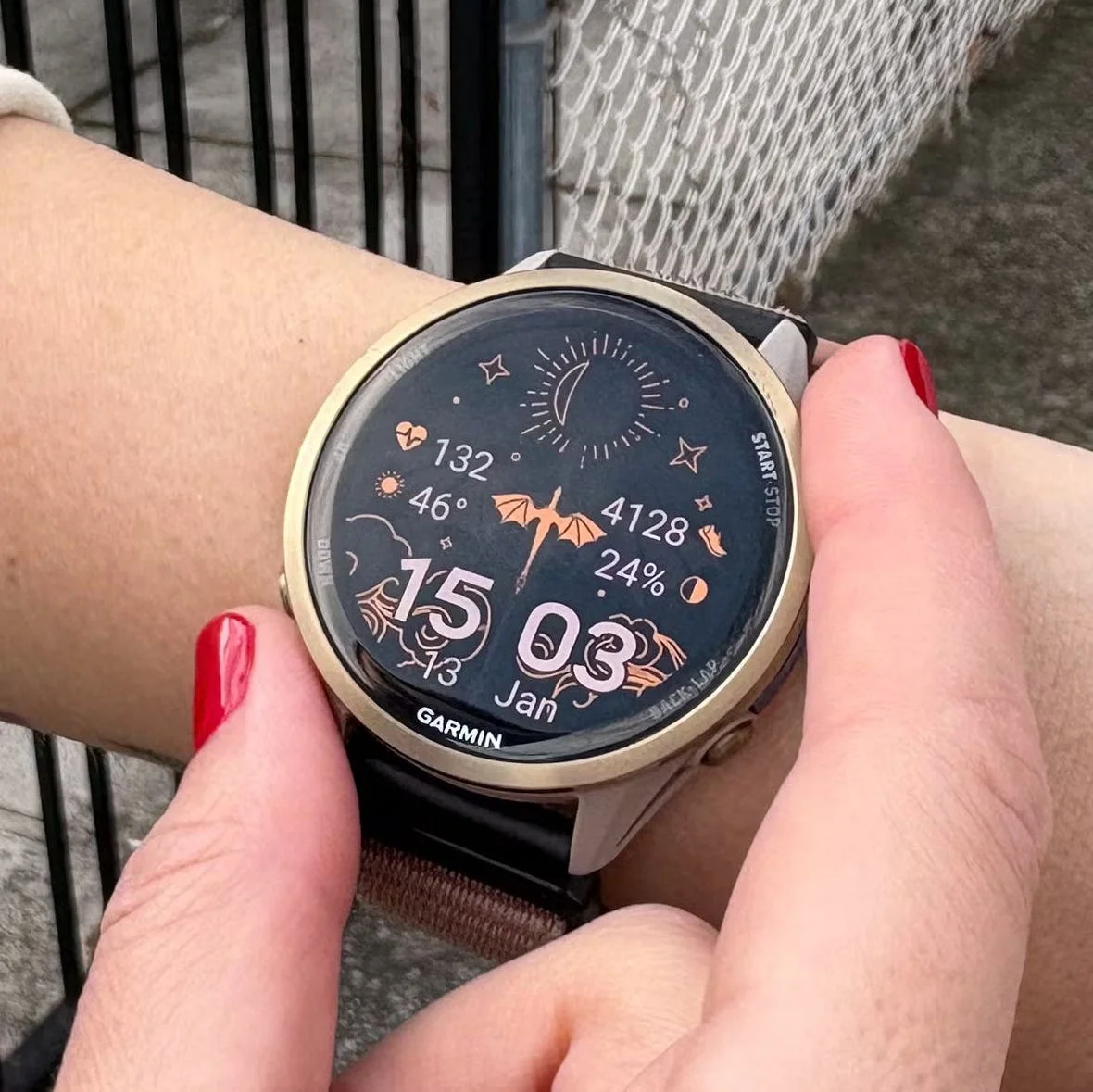
(Featuring an aftermarket Fourth Wing watchface.)
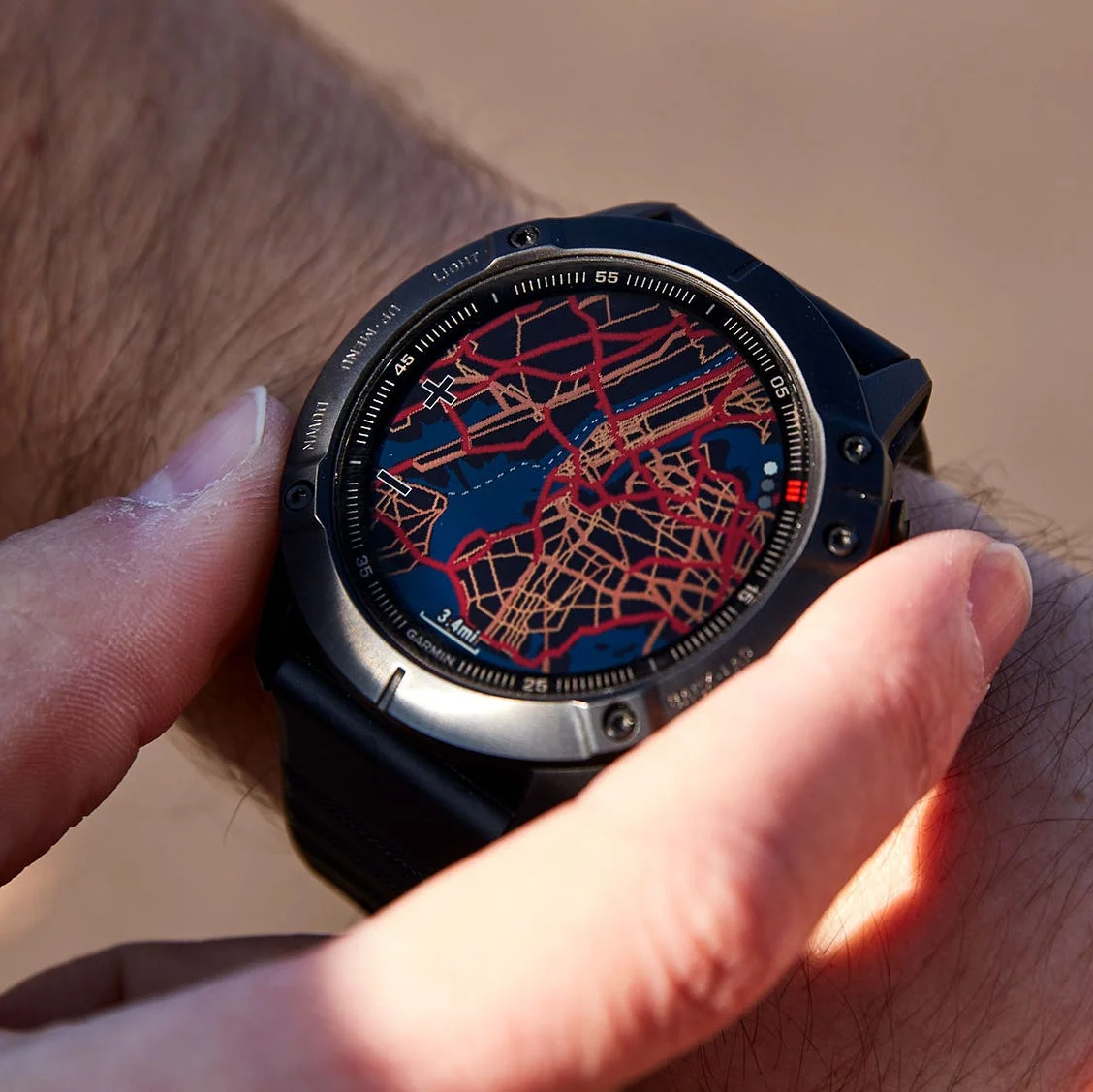
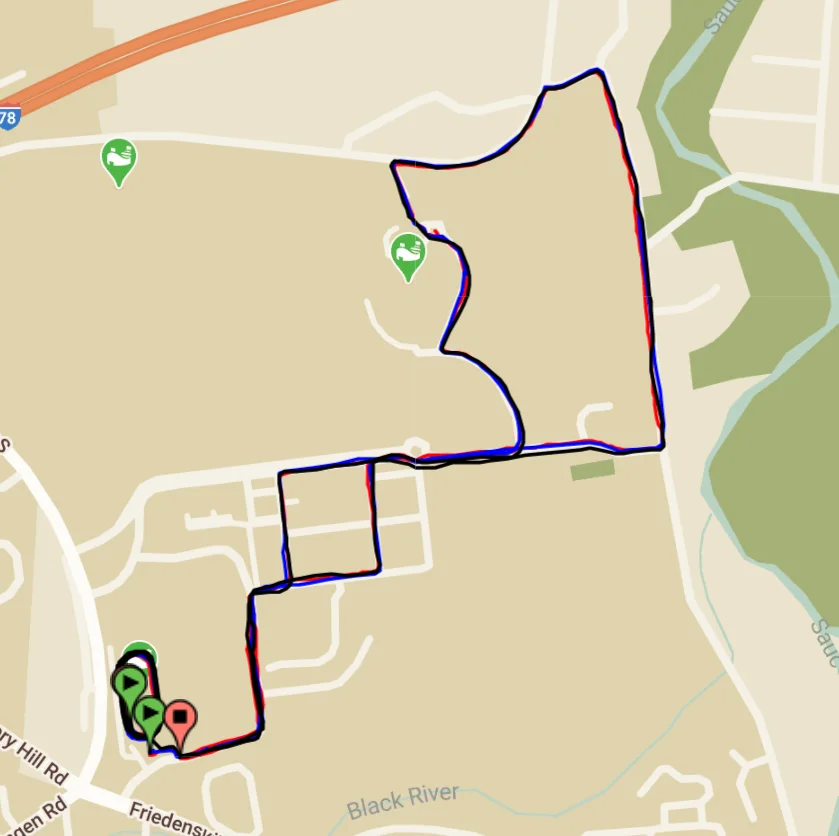
The Forerunner 970 is a joy for a data nerd such as myself. It’s also just killer for runners who want complex road maps laid out in a way that makes them easily readable and simple to follow. During my last marathon cycle, it completely redefined how I planned long runs and pacing. The navigation tools were rock solid: turn‑by‑turn guidance, clean maps, and lane‑accurate GPS that never once drifted, even weaving through crowded city blocks. It’s the kind of reliability that makes tempo runs in unfamiliar areas actually fun.
Then there’s pace prediction. Instead of random estimates, the 970 builds performance models from your HRV, VO₂ max, and training load to forecast realistic race times. It’s humbling and addictive in equal measure—seeing your predicted splits inch closer to goal pace is its own form of motivation.
Were the pace predictions always right? Of course not. But I was always trying to beat them, so that may be on me. Add in training readiness, stamina tracking, and a battery that lasts nearly 10 days with daily use, and you’re getting enough data and fun insights that it could completely change the way you train. I know that it has for me.
Pros
- Accurate GPS and reliable pace guidance
- Excellent structured workout suggestions
- Compact, comfortable design for daily wear
- Great performance‑to‑price ratio
Cons
- No advanced endurance metrics (HRV, stamina)
- No music storage
- Nav needs improvement
Key Specs
| Connectivity | Bluetooth, Wi-fi, ANT+ |
| Battery Life | 10 days with heavy training |
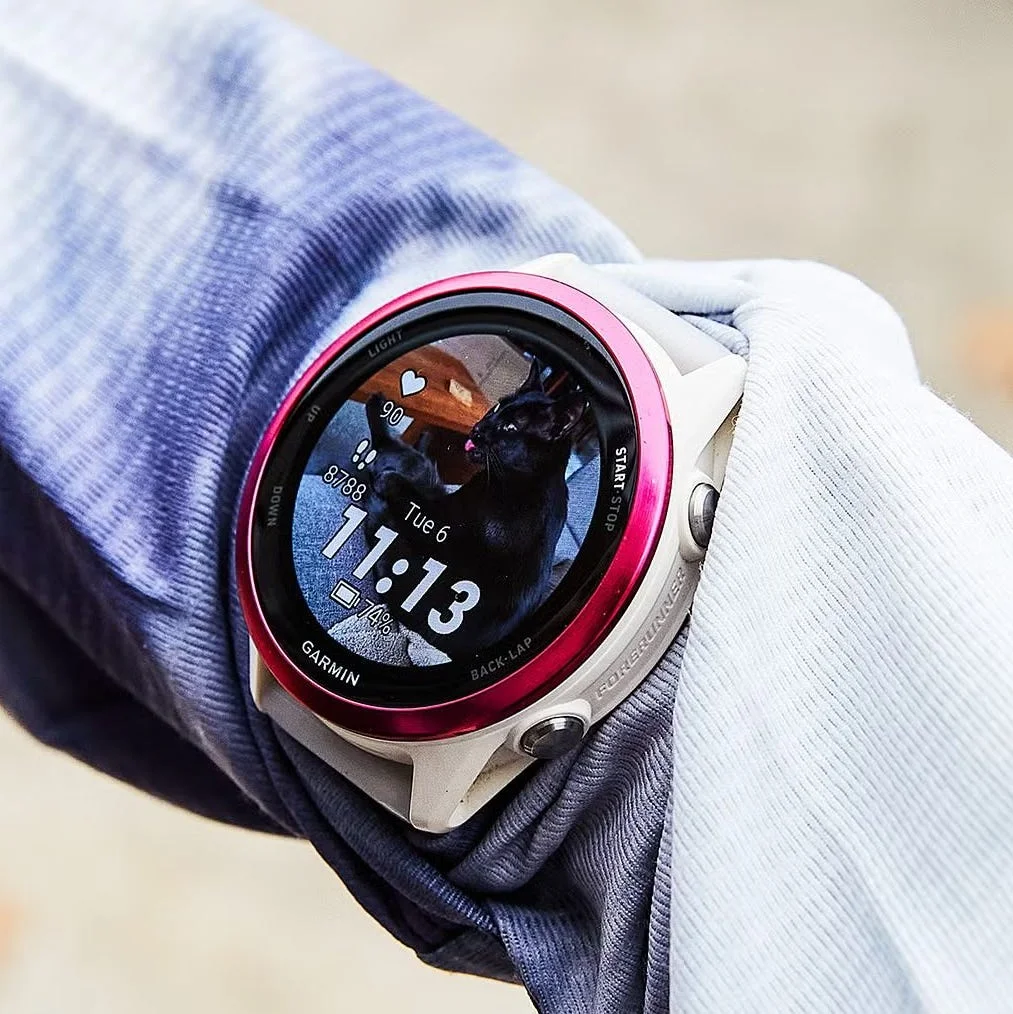
The Forerunner 570 may be the younger sibling of the 970, but it’s no knock‑off—it’s the overachiever who punches above its weight. When gear editor Amanda Furrer tested it, she called it the rare watch that feels good enough to wear every day and accurate enough to trust for race training months later. It slots perfectly between Garmin’s entry‑level and pro models, delivering serious performance without the sticker shock.
Furrer notes that “The lock feature while running is really appreciated when you accidentally touch your screen and a small detail is having discard as the last menu item and making the scroll only go down so you don't mistakenly think you're hitting ‘resume’ only to discard because you hit an up button.”
One thing she doesn’t love is the organization. She said, “It takes forever to remember how to turn off notifications or where to find audio choices. When I have to reset, it takes way too long to find all my preferences (no alerts being the main thing).”
GPS performance is outstanding—fast to lock, steady on signal, and impressively consistent on tempo routes or long weekend runs. The pace guidance and adaptive workout suggestions land right in the sweet spot between helpful and obsessive, letting you train smarter without drowning in data. HR tracking is solid, and the smaller, lighter case makes it ideal for runners with petite wrists or anyone who doesn’t want to feel weighed down.
It’s the perfect match for data‑curious runners ready to graduate from the basics without going full pro.
Pros
- Unreal solar‑assisted battery life (20+ days in GPS mode)
- Advanced endurance and recovery metrics
- Durable build designed for ultras and multi‑day efforts
- Consistent GPS accuracy on road and trail
Cons
- Bulky for smaller wrists
- Lacks some smartwatch features (music, NFC)
Key Specs
| Connectivity | Bluetooth, Wi-fi, ANT+ |
| Battery Life | Up to 320 hours in GPS mode, 100 hours in GPS/working/training, a month or more in smartwatch mode |
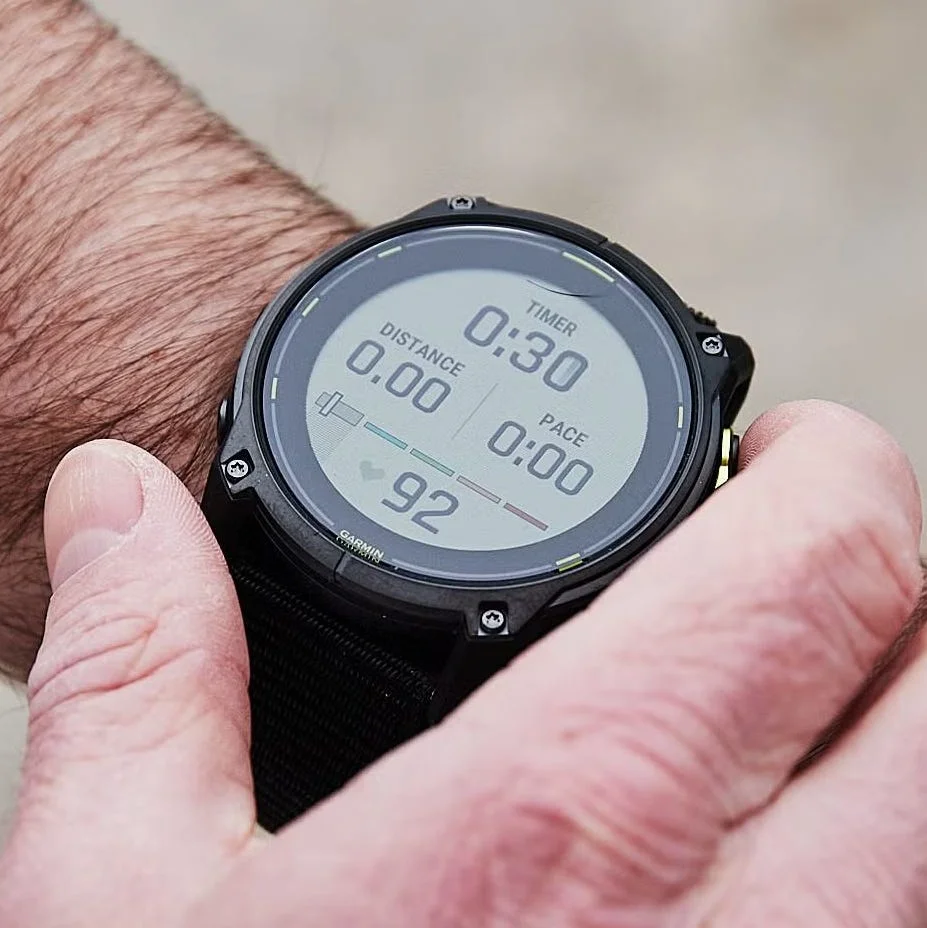
I’m currently testing the Enduro 3 as part of my ultramarathon training, and it’s proving to be the heavyweight champ of endurance watches. I took it out on a 34‑mile road‑and‑trail run last weekend, and it barely made a dent in the battery as it is basically a solar‑assisted behemoth that punches the Energizer Bunny in its drum-pounding face. Garmin claims 20+ days in GPS mode, and based on what I’ve seen, that’s no exaggeration.
This thing is unapologetically rugged. Yes, it’s bulky, but the moment you hit a long climb or shuffle through a foggy pre‑dawn trail, you realize why. The thing can take a beating, be shielded by trees or skyscrapers, and keep going. The endurance metrics, climb and heat acclimation data, and recovery insights are ridiculously detailed, and honestly shocking to see for someone not used to tracking these sorts of things. Despite the size, it wears lighter than you’d think, (still lighter than the Apple Watch Ultra) and the display is bright and clear in any condition.
The Enduro 3 isn’t for casual joggers—it’s for runners who schedule “long runs” by sunrise, not the hour.
Pros
- Stunning AMOLED display and sleek build
- Smooth, responsive interface
- Deep coaching and recovery metrics
- Stylish enough for daily wear
Cons
- Premium price
- Limited battery with always‑on display
- Some metrics can overwhelm new users
Key Specs
| Battery Life | Up to 23 days |
| Connectivity | Bluetooth Smart, ANT+, Wi-Fi |
| Connectivity | Bluetooth, Wi-fi, ANT+ |
| Battery Life | Up to 13 days in smartwatch mode, 24 hours in GPS/training mode |
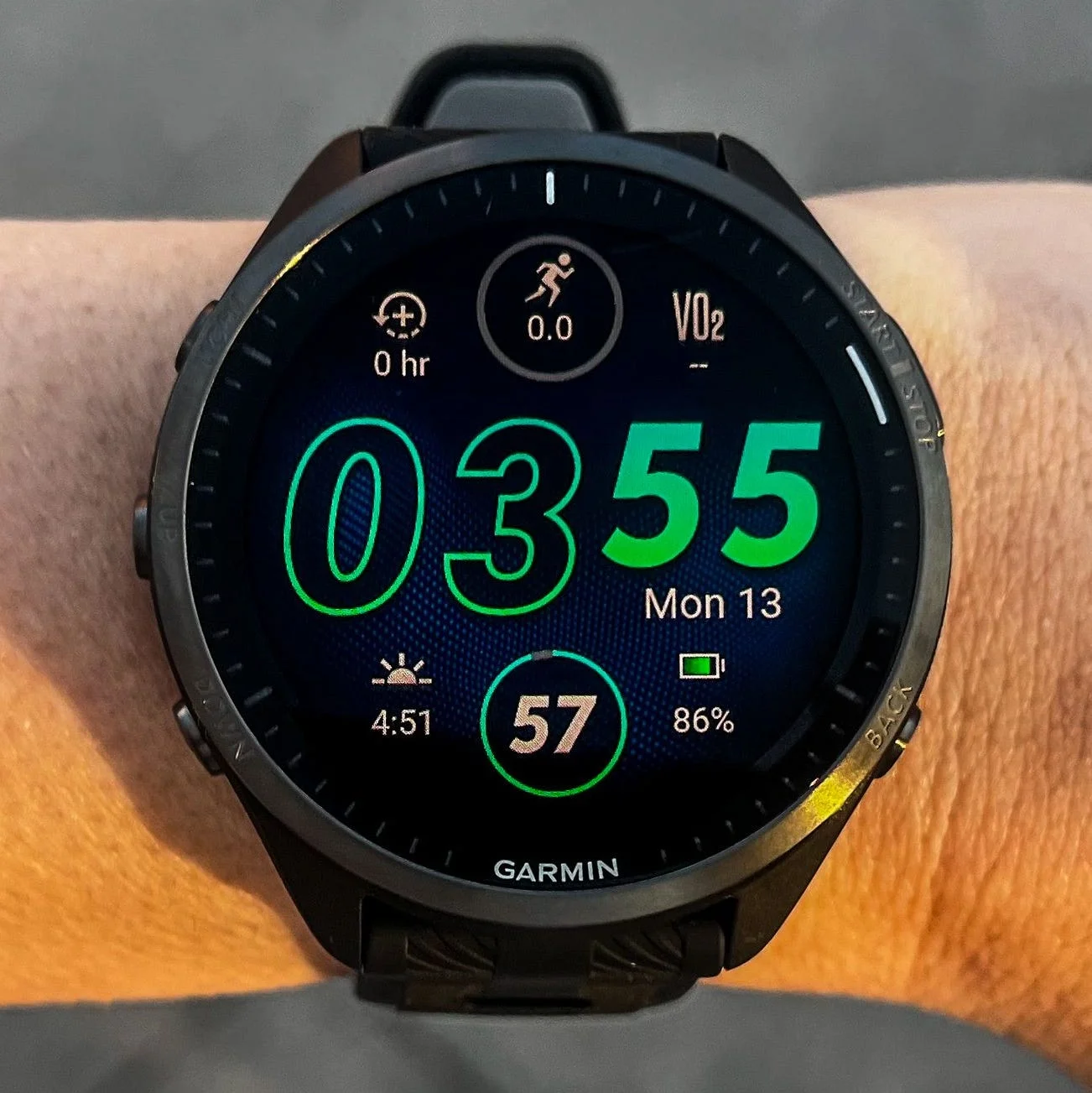
When I shifted from testing the 265 to the 965 last year, it was like going from a flip phone to a smartphone. The biggest difference between the 55, 265, and 965 is undeniably the display and maps. We're talking a massive, absurdly bright AMOLED screen that makes every single data point pop with vibrant, perfect clarity. The UI is speedy, too, finally banishing the micro-lag that plagued previous models. Plus, the build is a definite upgrade: a lightweight titanium bezel with finer details and design points.
While the hardware is sleek, what truly upgraded my training was the sheer density of actionable, personalized metrics. This watch marches straight past simple pace and distance. Features like Training Readiness, deep-dive HRV Status (the gospel truth on your systemic stress), dedicated Race Widgets, and nuanced Performance Insights lay out what your training and habits are doing to your body.
The age of "I think I'm recovered enough" is officially over. The 965 hands you a scientifically validated report card on your physiological state. Knowing, with high confidence and with a high degree of watch bullying, whether to absolutely send that track session or to pivot to an easy Z2 recovery run is the single biggest game-changer for sidestepping overtraining, crushing injury risk, and locking in consistent progress.
And for a full-featured super-tool, the Forerunner 965 is lightweight. This comfort is absolutely crucial because you must wear it 24/7 to nail those vital sleep and deep recovery metrics—the essential inputs that calculate the next morning’s all-important Training Readiness guilt trip.
Pros
- Seamless iPhone integration and calling
- Bright AMOLED display with five‑day battery
- Compact, stylish design for daily wear
- Strong GPS and heart‑rate accuracy
Cons
- Lacks advanced training tools of higher‑end Garmins
- Shorter battery than pure fitness models

Features at a Glance
| Battery Life | 7-11 days |
| Connectivity | Bluetooth, WiFi |
| Connectivity | Bluetooth, Wi-fi |
| Battery Life | Up to a week in smartwatch mode, 12 hours in GPS/training mode |
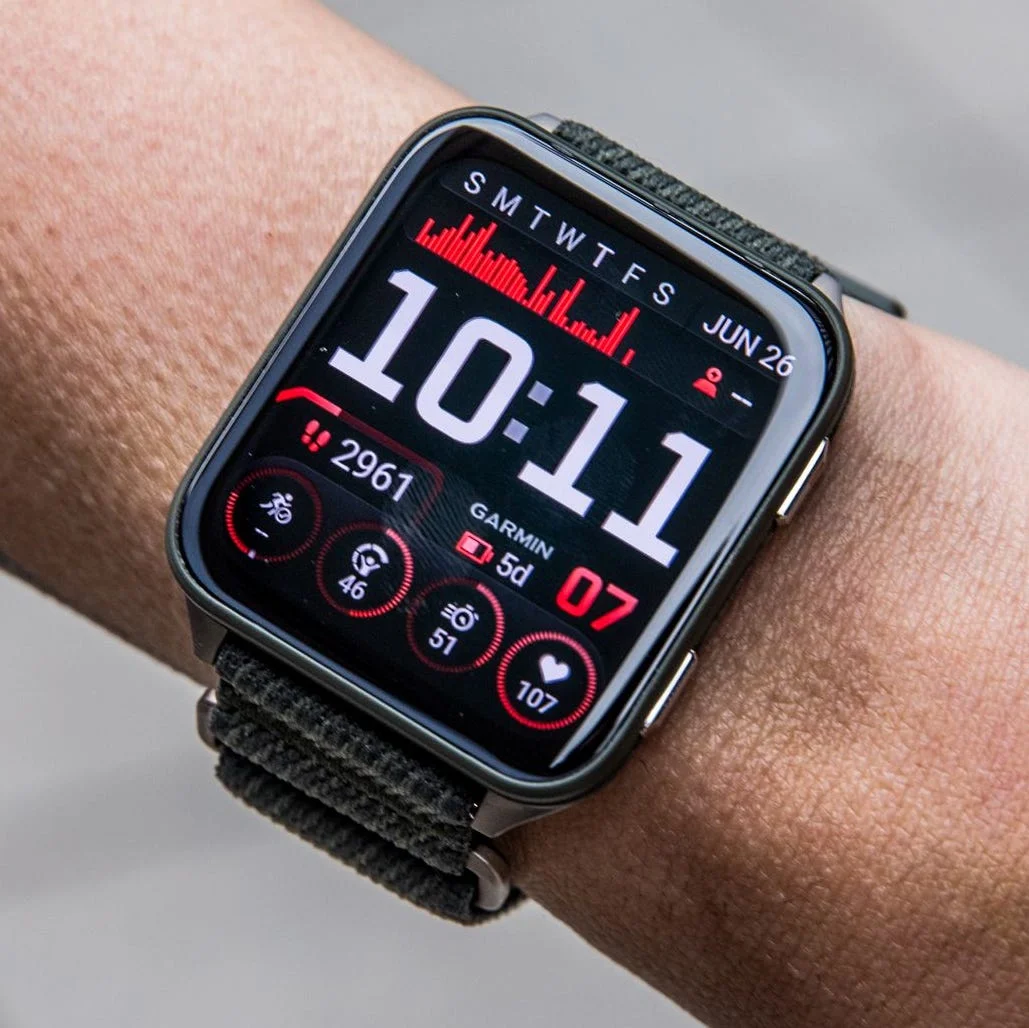
The Venu X1 is for runners who love the style of a traditional smartwatch, but need the GPS and accuracy of a Garmin. I paired it with my iPhone, and everything just worked—calls, notifications, playlists, you name it. That seamless integration makes it feel close to an Apple Watch experience, but with Garmin’s signature accuracy running underneath.
It’s definitely the most “wear‑anywhere” Garmin I’ve tested. I wore it from early‑morning tempo runs straight into meetings, and it never looked any more out of place than every other square watch you see. (Though why are so many of us still wearing these to formal functions?)
The AMOLED display is crisp, the interface smooth, and the battery easily clears five days even with workouts and music streaming. It’s light enough to forget you’re wearing it until it buzzes with your next calendar alert, which it will, constantly. But it still offers real training data: heart rate, GPS, HRV, and body battery tracking.
The Venu X1 is a rare hybrid gem. It’s a true smartwatch that combines style, adaptability, and performance. If you live in the Apple ecosystem but refuse to settle for their battery life and want more in-depth metrics, get this puppy.
Pros
- GPS Satellite security/calling
- True multisport watch
- Diving ready
- Top-of-its-class metrics
Cons
- Heavy
- GPS calling done through Garmin, not EMS
Key Specs
| Connectivity | Bluetooth, Wi-fi, ANT+, Satellite |
| Battery Life | Up to 10 days smartwatch, 90 hours GPS/training mode |
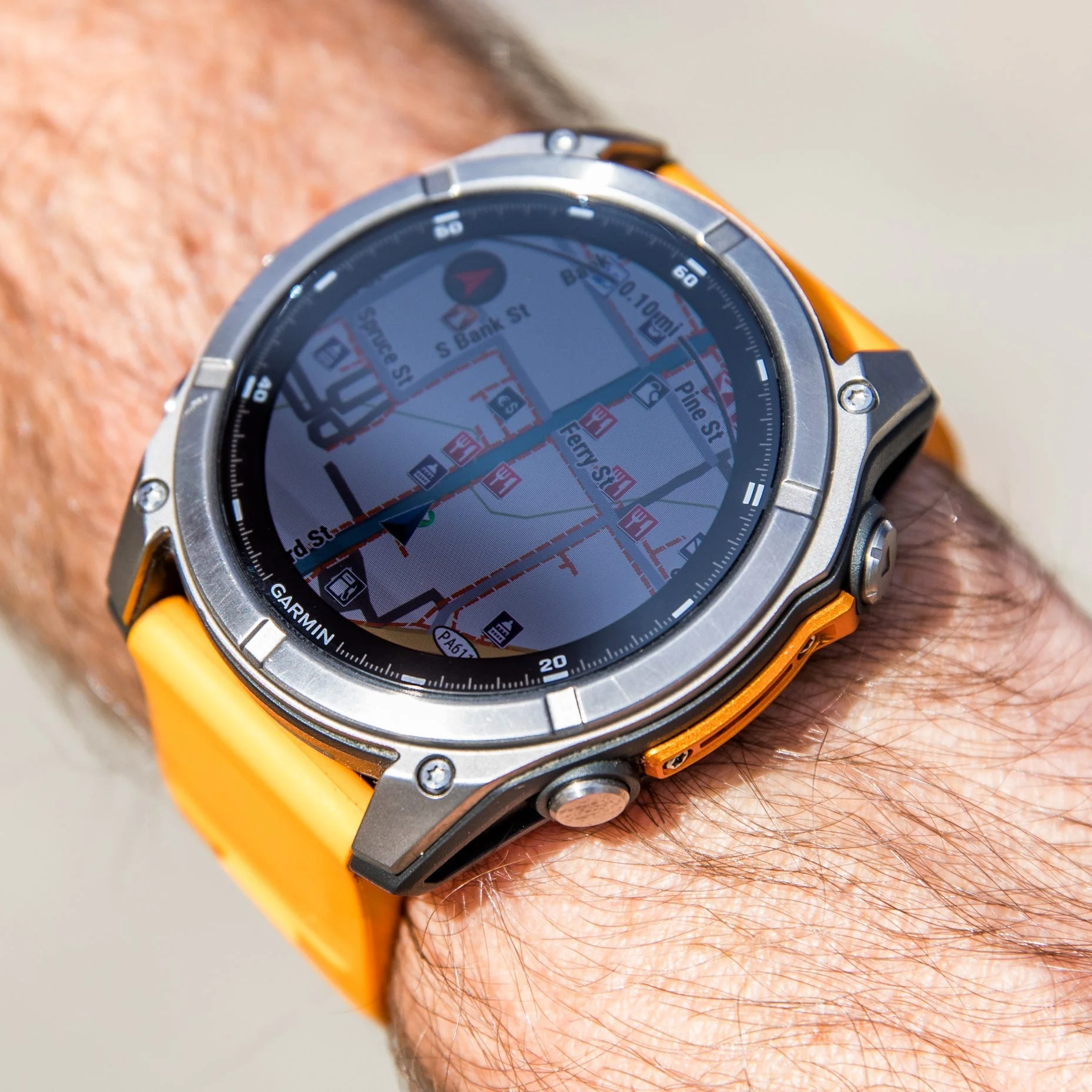
There’s a particular kind of unease that comes with running a backwoods trail—the one where you’re suddenly very aware that you’re alone and your phone has two bars of “maybe.” The Garmin Fenix 8 is the reason I actually go on that run anyway. Incident detection, live tracking, and satellite SOS messaging on the solar models mean my husband knows where I am even when the trail doesn’t cooperate, and if something goes wrong, I’m not just hoping someone else happens to come through.
The running data goes well beyond pace and heart rate. Lactate threshold estimates, real-time stamina, hill score, training load focus, and the kind of feedback that’s actually useful mid-block, not just pretty graphs to get your kudos. The multiband GPS holds a clean line on technical trail, which matters when the difference between 17.4 and 18 miles is the difference between hitting your long run or lying to yourself about it.
The multisport side is off-the-charts good. Open-water swim tracking, seamless tri transitions, solid rep detection in strength mode. I’ve used it for trail running, road racing, and trail running trips where I wanted elevation data more than I wanted anything else, and it gives me just that.
Battery runs 90 hours in GPS mode. I’ve done long ultras with tracking burning the whole time and landed home with juice to spare. At $1,200 it’s expensive, but it’s also the last watch you’ll feel like you need to upgrade.

FAQs
Become a Stronger Runner With These Exclusive Training Programs









Cat Bowen, senior editor of commerce; reviews, is a seasoned runner with more than 20 years of distance running experience, including dozens of marathons, half marathons, and even a few ultra marathons. For over a decade, she has tested parenting, fitness, home, and running gear and written in-depth guides to help readers with their next purchase. Holding multiple advanced degrees and currently studying kinesiology, Cat Bowen brings research-backed insight to all of her guides. Passionate about women’s health and neurodivergent inclusion, she advocates for closing research gaps and helping others—especially AudHD people—find joy in running and fitness.