Frank Gagliano’s coaching legacy is measured in Olympic teams and championship performances, but his influence ran deeper than results. Known as “Gags,” he guided more than 40 runners to sub-four-minute miles, coached 15 Olympians and helped develop a world championship medalist. He died at 89 after a career that stretched across high school, college and professional track—and continued until around 2023.
For the athletes who trained under him, Gagliano’s defining quality was the attention he gave each person. “He made you feel like you were the only athlete he cared about,” said Diljeet Taylor, who trained with him in Palo Alto and now coaches women’s track and cross country at Brigham Young University. Then, she recalled, athletes saw that he treated everyone that way. “It’s an amazing thing, really.”
A coaching career built across generations
Gagliano’s path took him from Roselle Catholic High School in New Jersey to Manhattan College, Rutgers and Georgetown, then through professional training groups in Washington, D.C.; Palo Alto, California; Eugene, Oregon; and New York. He worked with athletes at different stages and levels, from college walk-ons to established international competitors.
At Manhattan, where he joined the staff as an assistant in 1969, his teams reached the top of the NCAA indoor circuit. Manhattan won the 1973 NCAA indoor championship. He became Rutgers’ head coach in 1974, and steeplechaser Mike Roche went on to make the 1976 Olympic team. Gagliano later led Georgetown from 1983 to 1999, coaching Penn Relays championship teams and Olympians.
That record came with a reputation for intensity. Vin Lananna, a longtime friend and fellow coach, remembered hearing Gagliano at Manhattan before he met him. “He was coaching the throwers and I heard this bellowing voice yelling at somebody out on the field. He was intense.” Ron Speirs, who ran for Gagliano at Rutgers and became his first sub-four-minute miler in 1977, described those early years as “the wonder years,” adding, “It’s a wonder he survived.”
From football player to track coach
Francis X. Gagliano was born in the Bronx on March 20, 1937, and grew up on East 237th Street in a lively Italian American family. His sister, Dee Lycett, recalled a home full of athletes and plenty of food. Gagliano played quarterback at Mount Saint Michael Academy before attending Richmond College in Virginia.
He joked that it took him “five years and four summers” to graduate. Two of those summers were spent at Officer Candidates School in Quantico, and beginning in 1956 he served eight years as a Marine Corps reservist. He was never called to active duty.
After college, Gagliano signed with the Canadian Football League’s Hamilton Tiger-Cats. In 1960, the team sent him to the minor-league London Lords. His days involved selling coffee and soda at a construction site; his evenings were spent playing football, sometimes at quarterback. He decided that routine wasn’t the life he wanted and returned to the United States.
He also missed Roberta “Robbie” Arnold, whom he had met during his junior year at Richmond. They had kept in touch while he was in Canada and married in 1961, within a year of his return. That same year, Gagliano started teaching English and math and coaching track at Roselle Catholic. School officials told him he could coach football once the school had a team. It never did.
Track became his career. He left Roselle Catholic for Manhattan in 1969, then took the Rutgers head coaching job five years later. The coach who had expected to work in football instead built a decades-long record in middle-distance and distance running.
Professional groups and Olympic moments
In 1993, while still at Georgetown, Gagliano launched the Reebok Enclave, his first professional training group. Its athletes included Steve Holman and Rich Kenah. Kenah ran the 800 meters in 1:43.38 and won bronze at the 1997 indoor and outdoor world track and field championships.
Gagliano brought that experience to California in 2001 to coach the Nike Farm Team in Palo Alto. Under his guidance, Nicole Teter set the American indoor record in the 800 meters. In 2006, Lananna persuaded him to try Eugene, Oregon, where he coached another professional group.
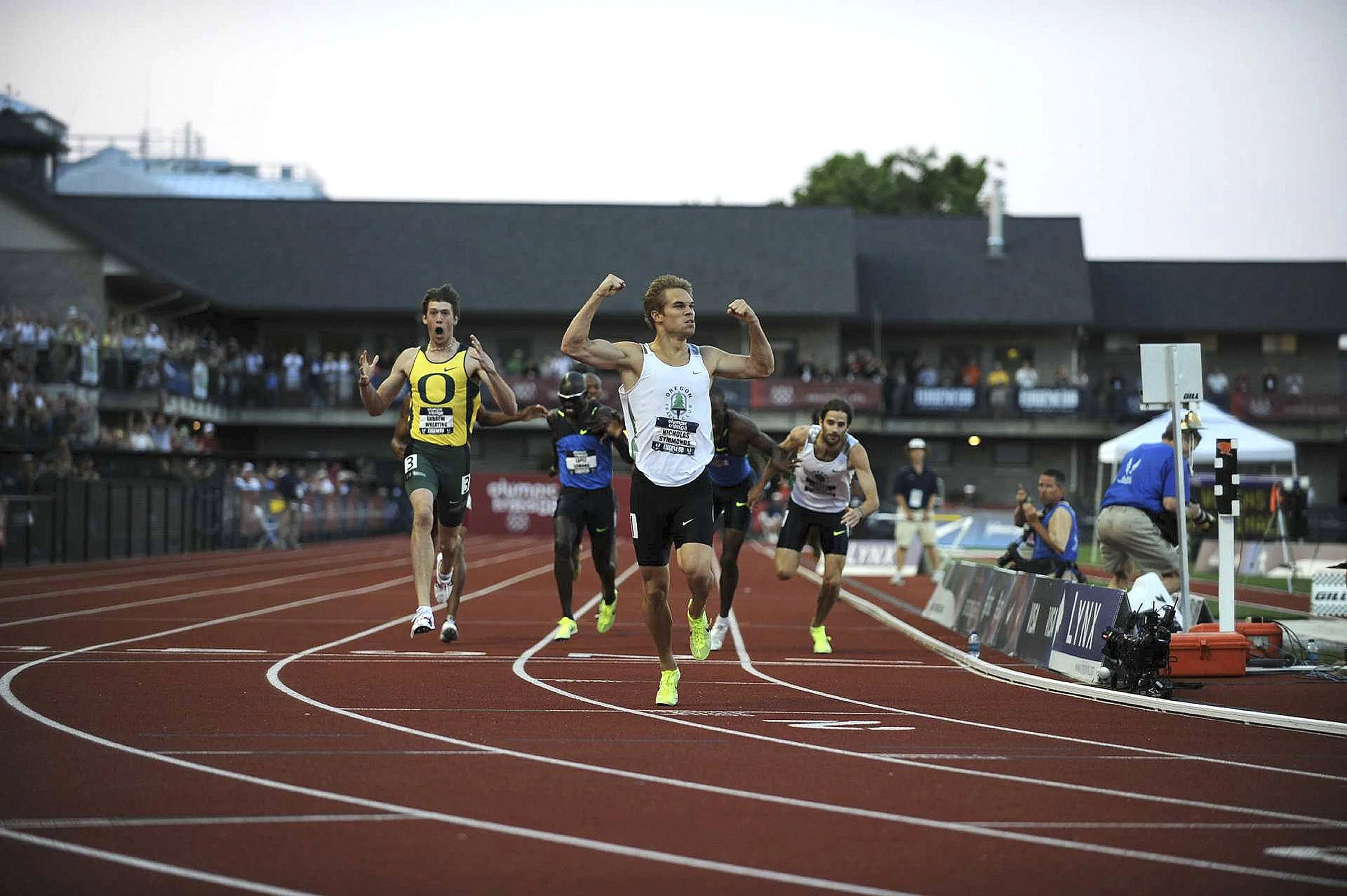
One enduring image from that period came at the 2008 U.S. Olympic Trials. Nick Symmonds won the 800 meters, with Oregon’s Andrew Wheating second and Christian Smith third, giving Oregon two of the three places. Gagliano coached both Symmonds and Smith.
Family needs brought Gagliano back to the East Coast in 2009, after his daughter-in-law became ill. Coaching soon drew him back. In 2010, he began working with Erin Donohue, a 2008 Olympian in the 1,500 meters, and the growing group became the New Jersey-New York Track Club, or NJNYTC.
Success measured in people, too
For years, Gagliano made the trip from his home in Rye, New York, to Rutgers every Monday and Friday to coach NJNYTC. Julie Culley and Donn Cabral earned Olympic places for 2012 and 2016, respectively. The women in the group also delivered consistent results at the U.S. outdoor championships: at least one NJNYTC runner finished in the top three every year from 2011 through 2015.
Lananna saw the group’s success as a reflection of Gagliano’s regard for every athlete, regardless of gender or status. “He genuinely appreciates and values the performances of an athlete, period,” he told Runner’s World in 2016. Gagliano put his approach simply: “I just treat them as human beings.” For him, he said, training, communication and motivation worked the same way for men and women.
The relationship often lasted beyond an athlete’s competitive career. Gagliano and Robbie became the people runners called with major life news. If an athlete passed through Rye, Gagliano might have a deli sandwich ready. Robbie sent Christmas cards, sometimes including a runner’s dog in the address. Gagliano’s familiar voicemail was brief: “Hi. Gag. Call me.” People called back.
He had considered stepping back after the 2016 Olympic Trials, but kept taking on athletes for the next Olympic cycle. NJNYTC moved to Westchester County, and even after its Hoka One One sponsorship ended in 2020, Gagliano continued meeting with athletes who stayed to train in 2021. The pandemic delayed the 2020 Olympic Trials, but it didn’t extinguish his desire to coach.
On the Morning Shakeout podcast in 2019, Gagliano explained why he was still at it: “My heart and my mind is in it big time. And as long as those two continue to be in it … I love it, and I’m not ready to pack it in at all. Actually, I have a lot of fire in my belly.” He coached until around 2023.
Gagliano is survived by Robbie, their four children and multiple grandchildren. The milestones he helped athletes reach will remain part of his record, but the more personal measure may be how many felt seen by him. From world championship medalists to Georgetown walk-ons, his ambition was to help runners improve—and to make them feel they belonged.