Strength work matters because running demands strong legs; running alone doesn’t guarantee them. For runners, that distinction can show up on a climb, in the final kick of a race, or in how you feel late in a long run.
Hill repeats, speed workouts, and long runs all help build performance. But consistent leg exercises can add strength that supports running faster and more efficiently. The bigger point is durability: relying only on running is a “less-than-optimal” strategy that may eventually contribute to injuries, says Dane Miklaus, C.S.C.S., founder of WORK Training Studio in Irvine, California, who spoke with Runner’s World.
That case is persuasive, though strength work isn’t a substitute for sensible running or a guarantee against injury. Miklaus designed the circuit below to help runners build strength, stay healthy, and pick up the pace. Add it to your strength-training plan, or pair it with an easy run. New to lifting? Start with this bodyweight leg workout.
Watch the Circuit
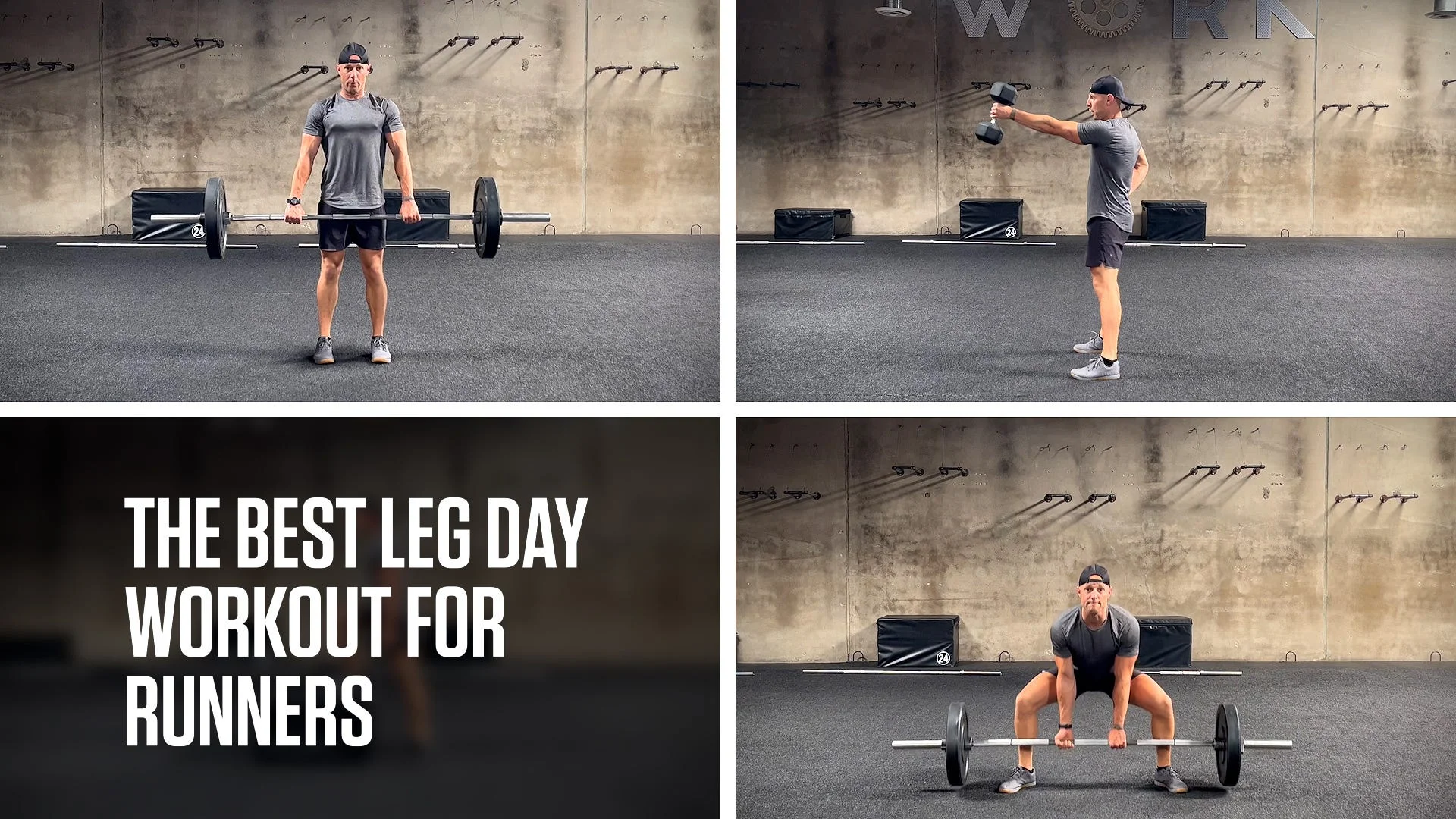
How to use the circuit: Do 6 to 8 reps of each exercise. For the dumbbell swing, step-up, and Bulgarian split squat, complete that many reps on each side. Rest for up to three minutes between sets, then repeat the entire circuit four times. Miklaus demonstrates each move in the video.
You’ll need a heavy pair of dumbbells and a loaded barbell. If you don’t have a barbell, use the dumbbells. Begin with a lighter load while you learn the movements, then build up. Miklaus’s advice is to choose a weight that makes the prescribed reps your limit: “If you can do more at the end of the set, it’s not heavy enough.”
The Moves
1. Stiff-Leg Deadlift
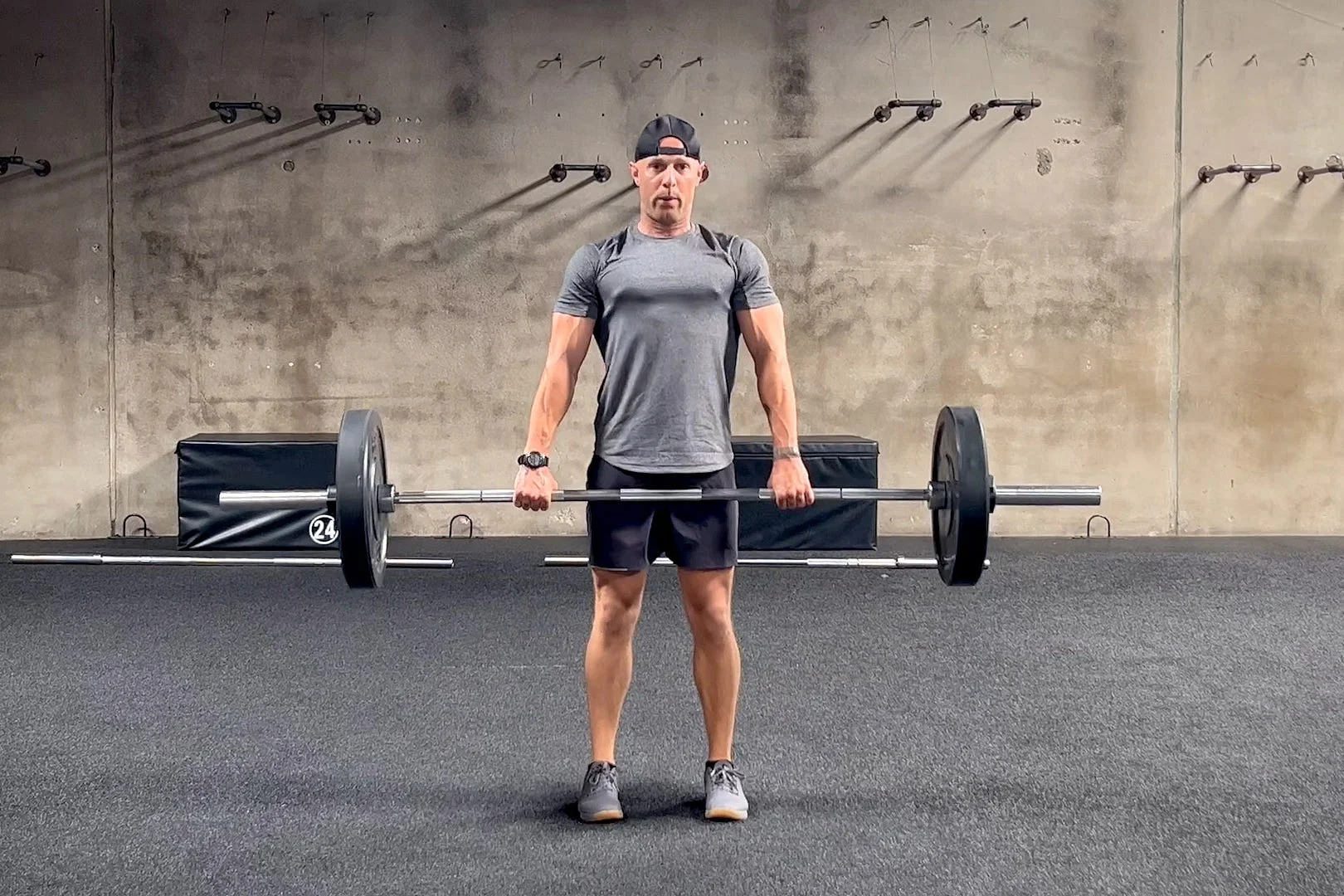
Why it works: The stiff-leg deadlift trains the hamstrings, glutes, and posterior core muscles—areas Miklaus says runners who skip strength training often neglect. “This can lead to knee and hip injuries and decrease top speed,” he says. Strengthening those muscles, he adds, can improve the power and speed of a runner’s “kick.”
How to do it:
- Stand with your feet hip-width apart. Hold a barbell in front of your thighs with straight arms, using an overhand or mixed grip.
- Keep your legs as straight as you can, with a slight knee bend if needed. Push your hips back and lower the weight until you feel a stretch in your hamstrings. Keep your back flat and shoulders from rounding.
- Engage your glutes and press your feet into the floor to extend your hips and stand.
- Repeat.
2. Dumbbell Swing
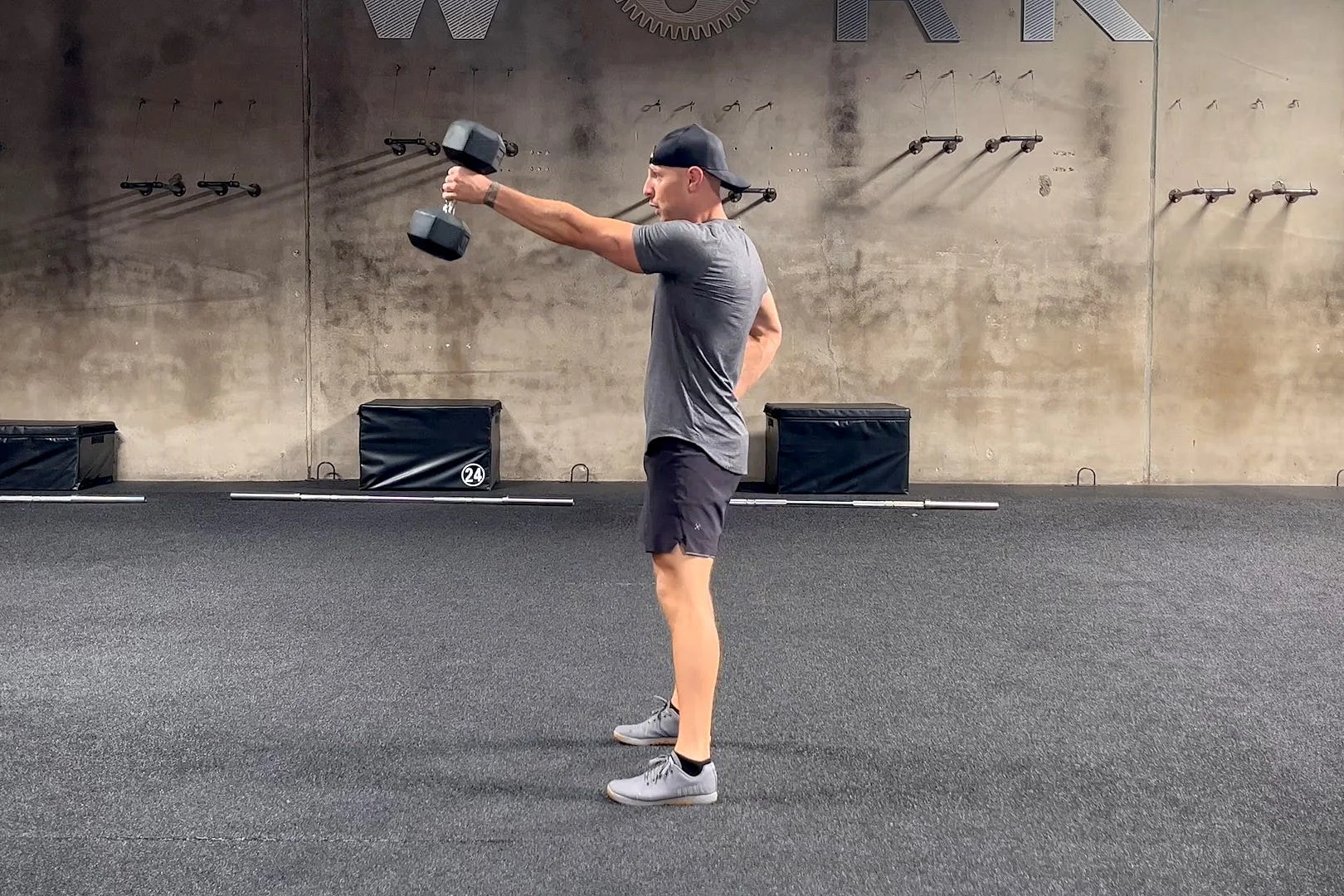
Why it works: A dumbbell swing trains the posterior chain and builds forceful hip extension, the action that helps propel a runner forward.
How to do it:
- Set a dumbbell on the floor and stand with your feet slightly wider than shoulder-width apart.
- Hinge at your hips, push your glutes back, and bend your knees. Grab the dumbbell with your right hand in a neutral grip, palm facing inward. Extend your left arm to the side for balance.
- Pull the dumbbell back between your legs to load your glutes and hamstrings.
- Press your feet into the floor, engage your glutes, and extend your hips and legs. Let the momentum swing the dumbbell in front of you with your arm extended. Brace your core; don’t arch your back or lean backward.
- Let the weight swing back between your legs, then flow straight into the next rep.
- Repeat for the prescribed reps, then switch sides.
3. Sumo Deadlift
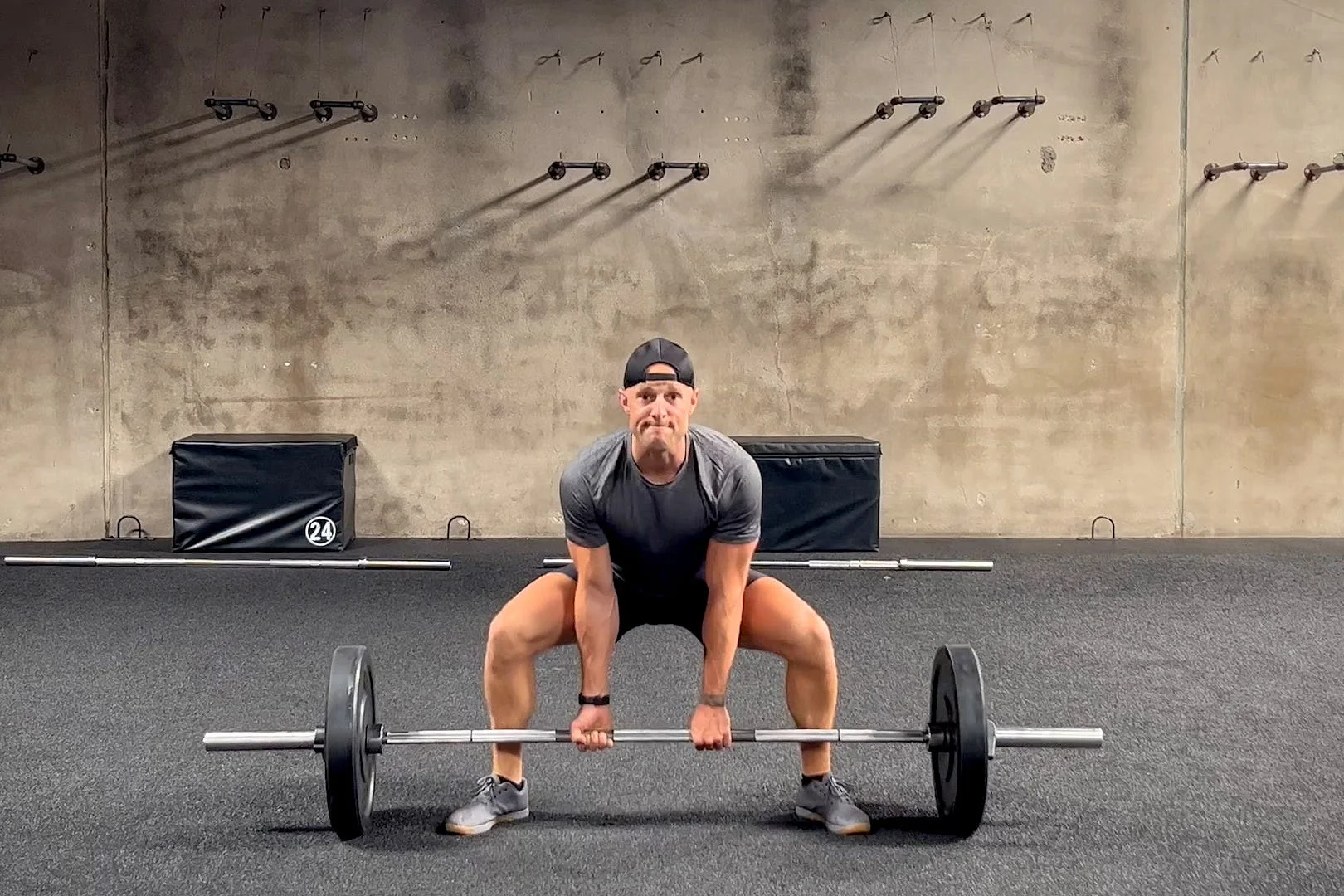
Why it works: A conventional deadlift puts substantial emphasis on the quadriceps. Miklaus says the sumo stance lets runners reach deeper into the glutes while also working the adductors, muscles along the inner thigh. That can matter for runners who’ve had a groin injury. “On top of that, any training in the frontal plane (e.g. adduction, or moving toward the body’s midline) will help increase hip strength and stability,” he says.
How to do it:
- Stand over the bar with a wide stance and your toes turned slightly outward.
- Keep your chest lifted and back flat as you hinge at the hips and let your knees bend naturally. Maintain a neutral spine, avoid hunching, and look down and slightly forward so your neck stays neutral.
- Grip the bar with an overhand or mixed grip. Keep your arms straight and shoulders back and down.
- Push through your feet to stand, keeping the bar close to your legs.
- With your back flat, hinge at the hips and bend your knees to lower the bar to the floor.
- Repeat.
4. Step-Up
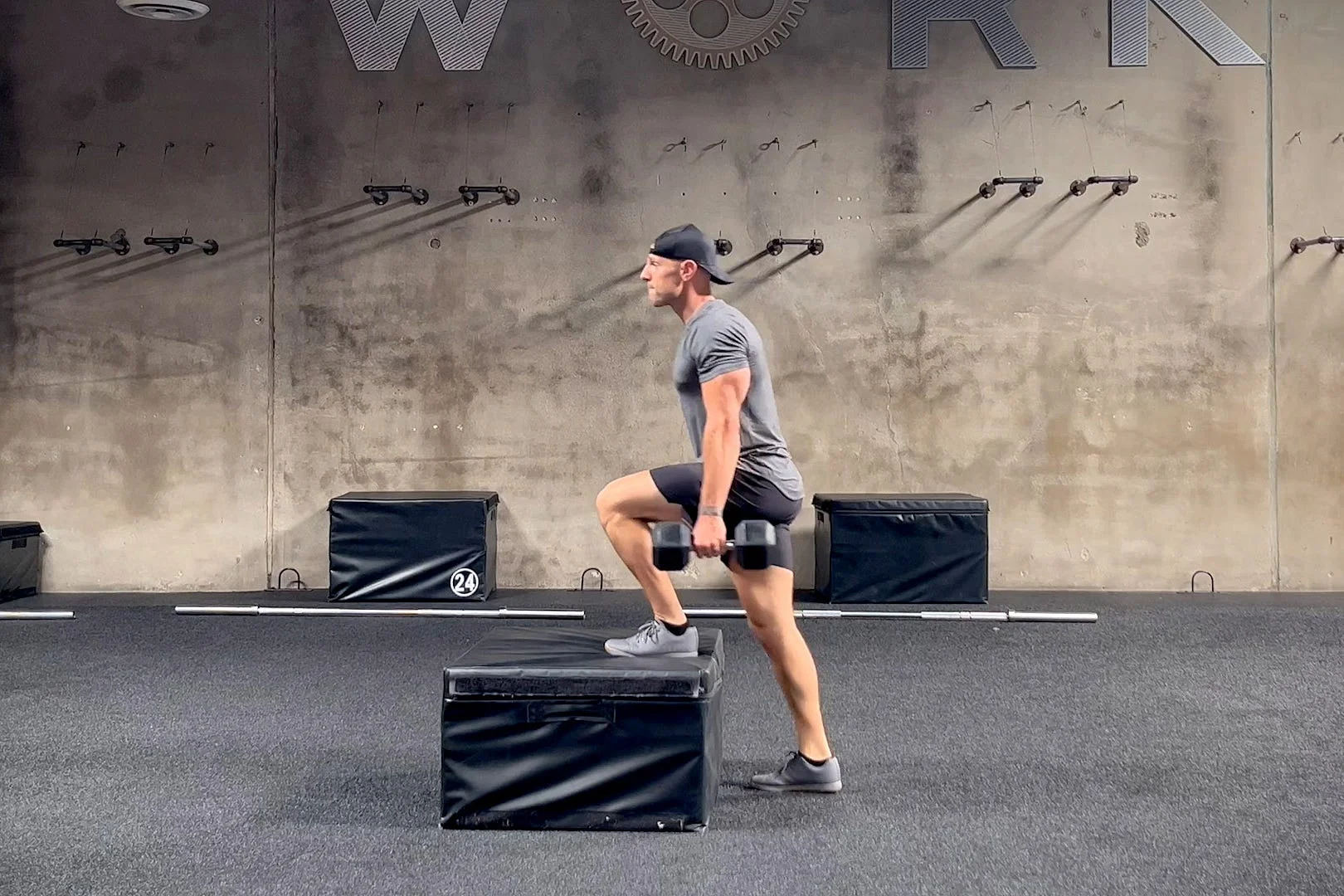
Step-Ups: Build Strength One Leg at a Time
Step-ups can build substantial glute strength, provided the box is high enough. Dane Miklaus recommends starting with your knee above hip height and your foot resting on the box. Stand fully upright at the top before bringing up the other foot, then step down with the same leg you used to lead. That controlled return trains the leg’s eccentric contraction, too. For more on the exercise’s glute benefits, see this guide to glute strengtheners.
Hold a dumbbell in each hand. Put your right foot on the box and drive through it to rise straight up, keeping your knee aligned over your laces. Touch your left foot lightly beside the right, then lower the left foot to the floor with control while the right stays planted. Repeat, then change sides.
5. Bulgarian Split Squat
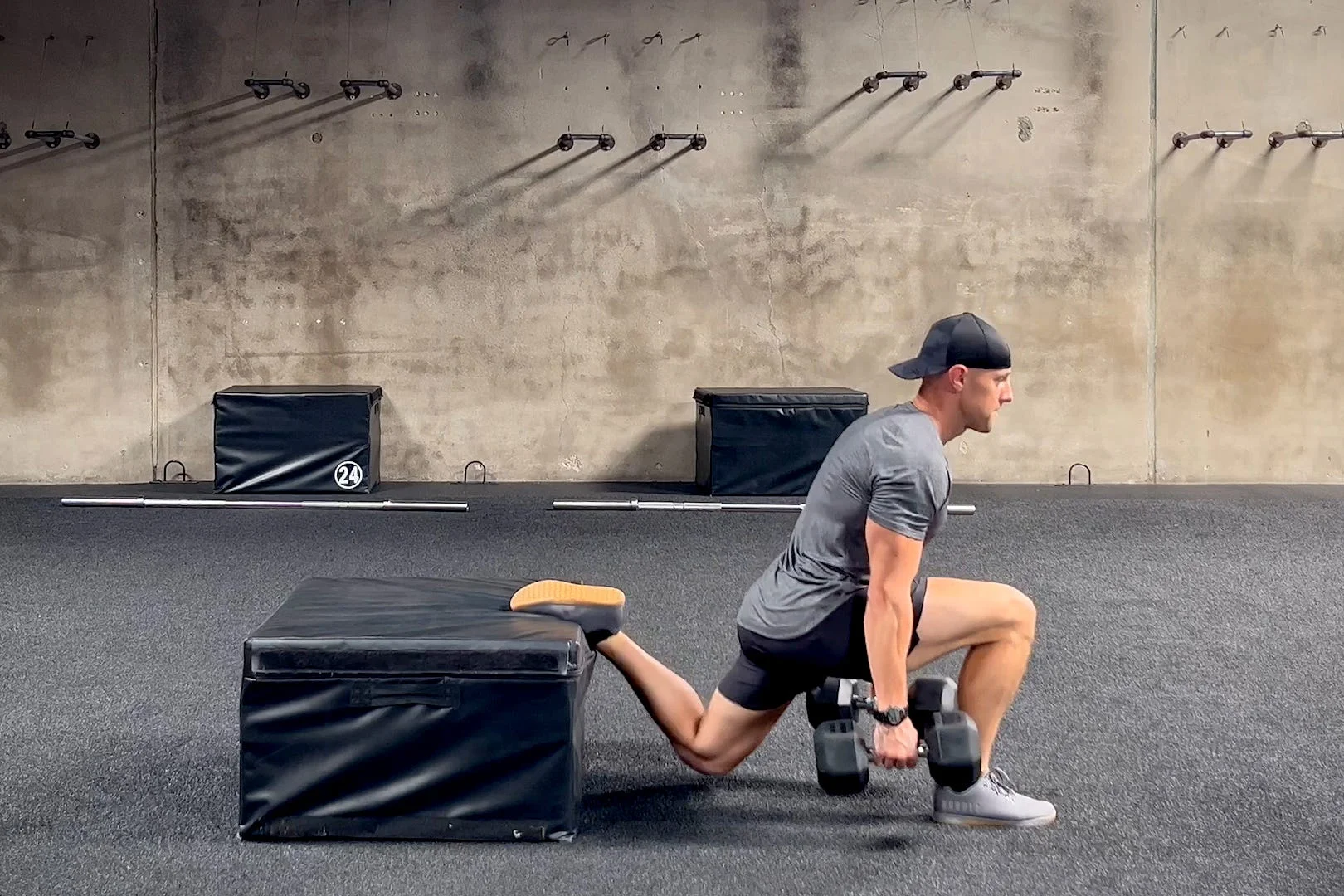
The Bulgarian split squat asks one leg to do most of the work while the body manages balance. Miklaus says it trains the quads, hip flexors, hamstrings, and glutes, while challenging stability down through the ankle. It’s a demanding variation of the squat, but that single-leg demand is precisely what makes it useful.
Stand facing away from a chair, bench, box, or step, with a dumbbell in each hand. Move a short distance forward and rest the top of your right foot on the support. Keep your chest lifted and back straight as you lean slightly forward and bend your left knee, lowering under control. Let the left knee follow the toes; bring the right knee close to the floor if your range allows. Press through the left foot to stand. Complete your repetitions, then switch legs.
Why Runners Need Leg Strength
Running form can feel natural and still be inefficient. Miklaus points to foot strike and cadence, along with side-to-side imbalances, stiff joints, weak connective tissue, and sore muscles from earlier sessions. Those issues can prompt compensations with every stride. At best, he says, they may hurt running economy; at worst, they can contribute to acute or chronic injuries.
A thoughtful strength-training program that works the legs and glutes can help runners spot and address those compensations. The payoff may extend beyond staying healthy. Skipping leg training can also mean leaving speed and power on the table.
That’s because fast-twitch muscle fibers support the strongest, quickest movements—including the shift from a jog to a sprint, as Miklaus puts it. Easy miles alone don’t challenge those fibers optimally. He recommends heavy resistance work and fast, explosive exercises to target them directly. If you’re a runner focused on pace, leg day is part of the training plan, not a detour from it.