Running shoes absorb a remarkable amount of force: each foot strike can load your body with 2.5 to 5 times your body weight. That makes cushioning more than a comfort feature. The right shoe can help you handle the repeated impact of training, whether you’re new to running or adding miles after years on the road.
At Runner’s World, our gear team tests the foam in shoes released each season, from daily trainers and stability shoes to cushioned models built for racing, everyday training, or recovery. Foam alone won’t tell you which pair is right. Our staff and run testers span different experience levels, paces, and weekly mileage, and we used their miles to assemble recommendations for different runners and training plans. If you’re choosing a pair, the workout you’ll use it for matters as much as how soft it feels.
Editor’s Note, October 27, 2026: The Brooks Glycerin Flex is now 24% off. It’s a lightweight, cushioned option for hard tempo runs.
Running shoesQuick Glance: The Best Cushioned Running Shoes
Our picks span different kinds of running
The shortlist makes a useful point: there’s no single shoe that fits every run, and the “best” label depends on what you need from a pair. The Brooks Glycerin 23 is the overall pick, while the New Balance Ellipse is the value choice. If you’re focused on faster training, the Brooks Ghost Amp is tagged for tempo runs; for distance, the Hoka Clifton Pro gets the nod. For a more energetic ride, the recommendation is the Adidas Hyperboost Edge. Runners seeking stability are pointed to the Nike Structure Plus, while the Altra Fwd Via 2 is the low-drop option. The Brooks Glycerin Flex is listed as the lightweight pick, and the New Balance SuperComp Rebel is aimed at first-time marathoners. Racing gets its own category with the Hoka Cielo X1 3.0; trail running, the Hoka Mafate X. That spread is more revealing than a single top-ranked shoe. It suggests the guide treats daily training, racing, stability, and terrain as distinct needs, though the list itself doesn’t explain how those tradeoffs were judged. Check the fit and intended use before treating any category winner as a universal recommendation.- Best Overall: Brooks Glycerin 23 (Men’s/Women’s)
- Best Value: New Balance Ellipse (Men’s/Women’s)
- Best for Tempos: Brooks Ghost Amp (Men’s/Women’s)
- Best for Long Runs: Hoka Clifton Pro (Men’s/Women’s)
- Most Responsive Ride: Adidas Hyperboost Edge (Men’s/Women’s)
- Best for Stability: Nike Structure Plus (Men’s/Women’s)
- Best Low Drop: Altra Fwd Via 2 (Men’s/Women’s)
- Best Lightweight Option: Brooks Glycerin Flex (Men’s/Women’s)
- Best for 26.2 First-Timers: New Balance SuperComp Rebel (Men’s/Women’s)
- Best for Racing: Hoka Cielo X1 3.0 (unisex)
- Best for Trails: Hoka Mafate X (Men’s/Women’s)
How We Selected
How we choose running gear
For six decades, Runner’s World has served runners across the spectrum—from walkers and casual joggers to sprinters, trail runners, and marathoners. Testing and recommending gear is part of that work. The team evaluates equipment ranging from running shoes and apparel to treadmills and running watches.
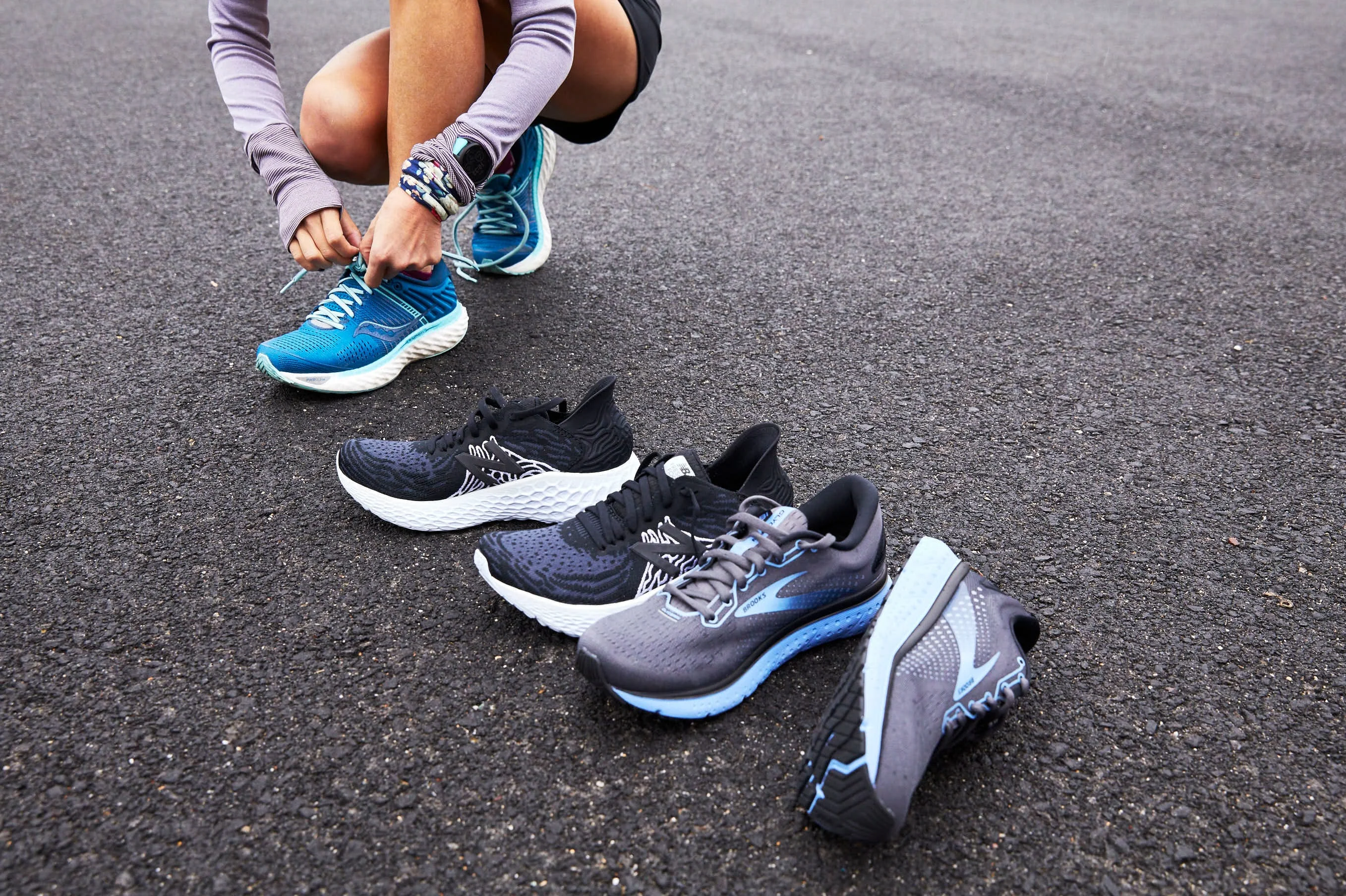
For this selection, I drew on my experience as a lifelong runner and running reviews editor, alongside input from fellow editors and our wear-test team. That combined perspective matters: our shoe program gathers impressions from more than 300 local runners with varied backgrounds. No single runner’s preferences can stand in for everyone’s, and that breadth helps us judge how these shoes perform across different needs.