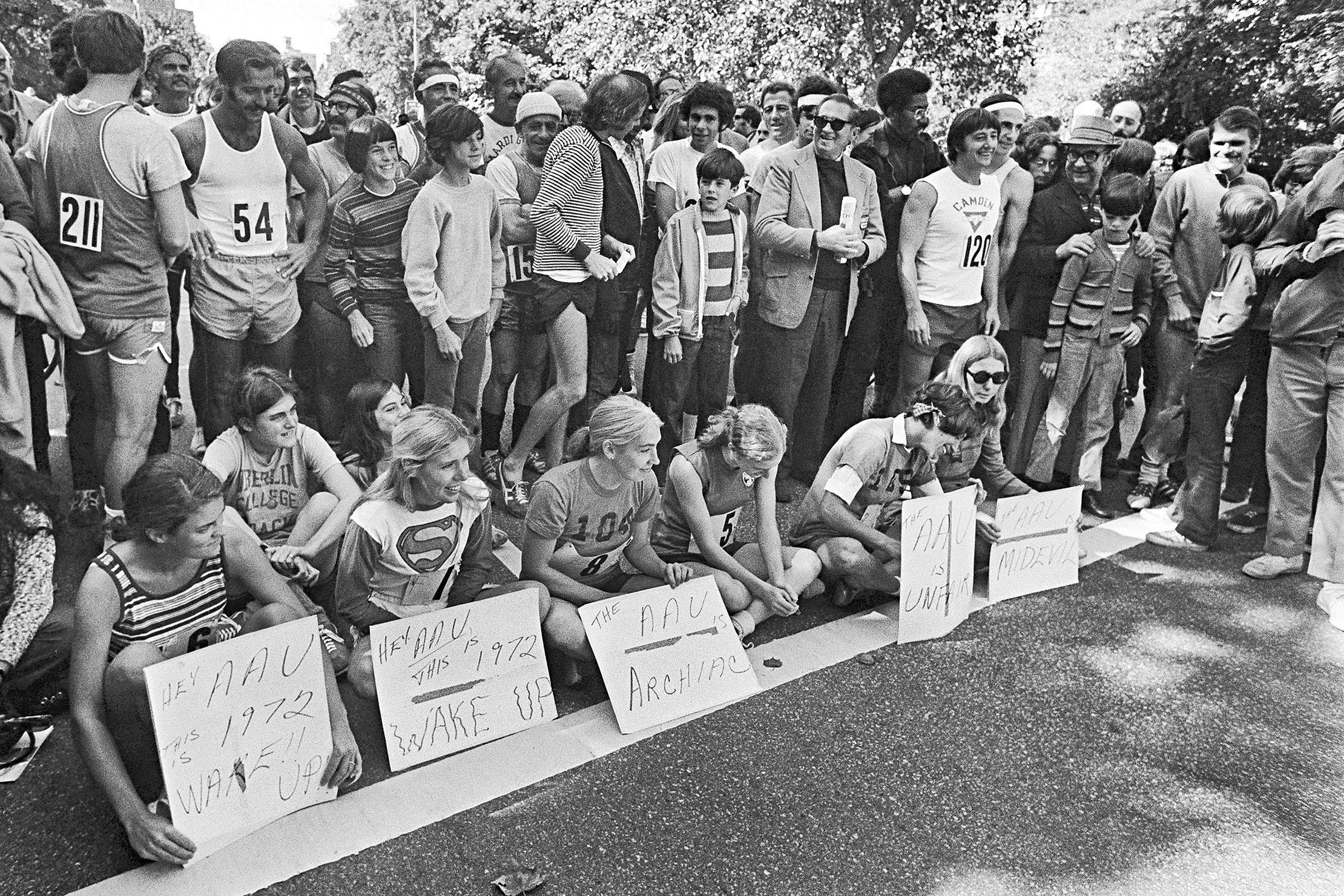
George Hirsch recalls how five organizers brought the New York City Marathon across all five boroughs, turning a risky one-time route into a global fixture.
Fifty years on, the city still runs with it
The New York City Marathon’s five-borough course turns 50 this Sunday. The race began in 1970 as a Central Park event; the route through all five boroughs arrived in 1976, taking runners from Staten Island to Manhattan. That change helped turn a small local race into what’s now described as the world’s largest marathon.
Five men drove the move: Ted Corbitt, Fred Lebow, George Spitz, Percy Sutton, and George Hirsch. Hirsch, now 92, is the only one still alive. A longtime magazine publisher, including at Runner’s World, he chaired the New York Road Runners board from 2004 to 2023. He also helped raise money and attract press attention for the 1976 race. NYRR calls the five men its
“trailblazers.” Hirsch has watched the event grow from an obscure Central Park race into a global fixture. (See the
numbers behind the 2025 marathon.)
In an interview in mid-October, Hirsch recalled the early planning and the first five-borough race. His story begins with a city under strain.
A risky idea for a city in trouble
New York in the mid-1970s was facing high crime, economic hardship, and an exodus of residents to the suburbs. Hirsch thought the city needed a lift. When Corbitt and Spitz proposed a marathon spanning all five boroughs, he saw the scale of the challenge immediately: organizers would have to close bridges, arrange police coverage, and find the money to make it work.
“Closing down a major city, the largest city in the United States, for a foot race was ambitious and it was unheard of at the time,” Hirsch said. Boston’s marathon, he pointed out, covers a smaller part of its city. The organizers won support from Mayor Abe Beame, though they didn’t present the race as an annual event. They had permission to try it once. Whether New York would welcome the idea was another matter.
“Our little running community was super excited about this New York Marathon,” Hirsch recalled of the run-up to 1976. “But what we had no way of knowing was how the city was going to embrace it.”
 New York Road Runners // Getty Images. Runners compete in the 1976 New York City Marathon, starting in Staten Island and finishing in Central Park on October 24, 1976.
The crowd answered the question
Hirsch started on the Verrazano-Narrows Bridge feeling eager and nervous. As he ran down into Brooklyn, the mood changed: people had lined both sides of the streets to cheer. By today’s standards, he said, the crowds were modest. For 1976, though, they were extraordinary—and they kept turning out along the route.
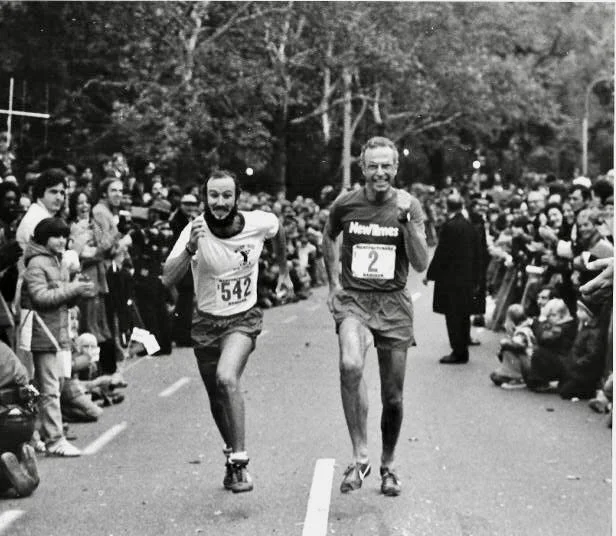 Courtesy George Hirsch. Hirsch (right, bib #2) races toward the finish in Central Park at the first five-borough marathon in 1976.
Hirsch finished in
2:49:29, 156th among 1,539 finishers. Bill Rodgers won the men’s race; Miki Gorman led the women. That night, Hirsch hosted a party at his brownstone. He called it a victory celebration: the plan had worked, despite all the ways it could have gone wrong.
From one bold route to a citywide tradition
The five-borough format stuck, and participation climbed steadily: 12,512 finishers in 1980, 23,774 in 1990, and more than 40,000 in 2009. The race is now routinely among the world’s biggest. A
record 60,000 participants could take part this Sunday.
The growth has changed the feel of race day, too. More than 2 million spectators watch,
NYRR says, filling the streets with handmade signs, music, and noise. New York’s route also helped make the idea of a marathon through a city center familiar elsewhere.
Hirsch goes further, calling the five-borough race “the most important development in the history of running.” His claim is sweeping, but the shift he describes is real: marathons have become defining public events in cities around the world.
 New York Road Runners // Getty Images. Spectators line the road in Central Park during the inaugural five-borough race.
A new running boom, and a much harder race to enter
Hirsch has seen several waves of enthusiasm for running. The 1970s jogging craze followed Frank Shorter’s marathon gold at the 1972 Olympics; now, he says, the sport is in its biggest boom yet. The COVID-19 pandemic helped push participation up, and
demand for races across the country has surged.
For runners, that surge has a practical consequence: getting into New York’s marathon—and even some smaller NYRR races—has become difficult. Only
1 percent of the 240,000 applicants to the 2026 marathon drawing were accepted.
This Sunday’s field will be about 40 times larger than the 1976 race, and nearly one-third of runners will come from abroad. Hirsch couldn’t have known what the first five-borough event would become. Now, he says, he can’t stop marveling at it.
 Start Listening
 Start Listening
 Start Listening
 Start Listening
 Start Listening