When minimalist running shoes dominated the running scene in 2010, Hoka rebelled. The brand made a grand entry into footwear with its maximally cushioned trail shoe, the Mafate. Ultrarunners loved the shoe for its foamy platform and shock absorption. It didn’t take long for other shoe brands to hop onboard the high-stacked cushioning train.
Now, in the age of super foams and World Athletics 40mm-or-below stack height regulations, the Hoka's max-cushioned shoes are totally on-trend. Runners—and non-runners—are reaping the benefits of its marshmallowy midsoles, accommodating fit, and rocker profiles. Some Hoka shoes are better than others, though: These are our favorite Hoka running shoes for every types of runner, along with a helpful primer on the king of cushioning.
Best Hoka Running Shoes Preview
- Best Overall: Hoka Clifton 11 (Men’s/Women’s)
- Best Value: Hoka Rincon 5 (Men’s/Women’s)
- Best Lightweight Trainer: Hoka Mach 7 (Men’s/Women’s)
- Best for Max Cushioning: Hoka Skyward X 2 (Men’s/Women’s)
- Best for Stability: Hoka Arahi 8 (Men’s/Women’s)
How We Selected
Our team of 300-plus local wear-testers is a diverse group of various ages, levels of experience, foot shapes, and paces. They provide valuable testing feedback that ensures our selections are all-inclusive.
Like every piece of gear tested by our team, the shoes below were evaluated through fit, feel, and ride. Below are the models we recommend for every type of run and runner.
*All weights are for men’s 10 and women’s 8 unless otherwise noted.
Full Reviews
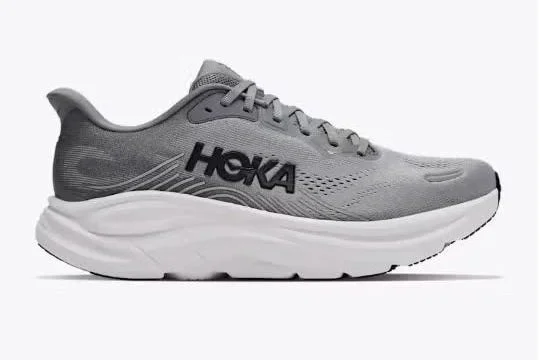
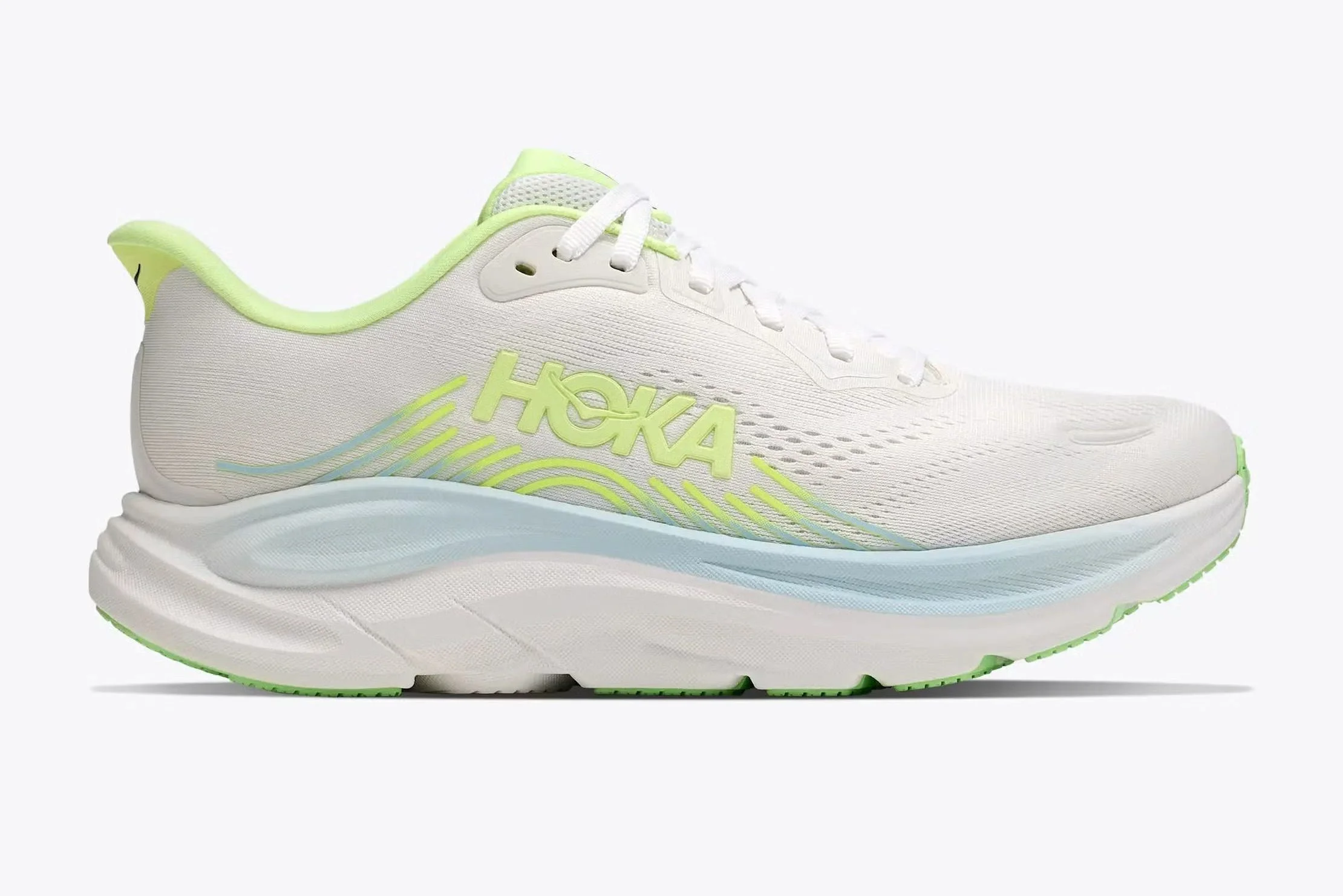
Best Overall: Hoka Clifton 11
Pros
- Soft and supportive CMEVA cushioning
- Broad midfoot
- Locked-in fit

Cons
- EVA foam not as responsive as supercritical foams

Key Specs
| Weight | 10 oz |
| Drop | 8 mm |
Pros
- Soft and supportive CMEVA cushioning
- Broad midfoot
- Locked-in fit
Cons
- EVA foam not as responsive as supercritical foams
Key Specs
| Weight | 8.3 oz |
| Drop | 8 mm |
Testing the Clifton 11 feels like catching up with an old friend you’ve known since you both were yay-old. Your body falls into that familiar rhythm after you put on the shoes: that supportive cushioning that just has enough give for you to sink down, and the breathable upper that comfortably houses your foot without any threat of squeezing and friction.
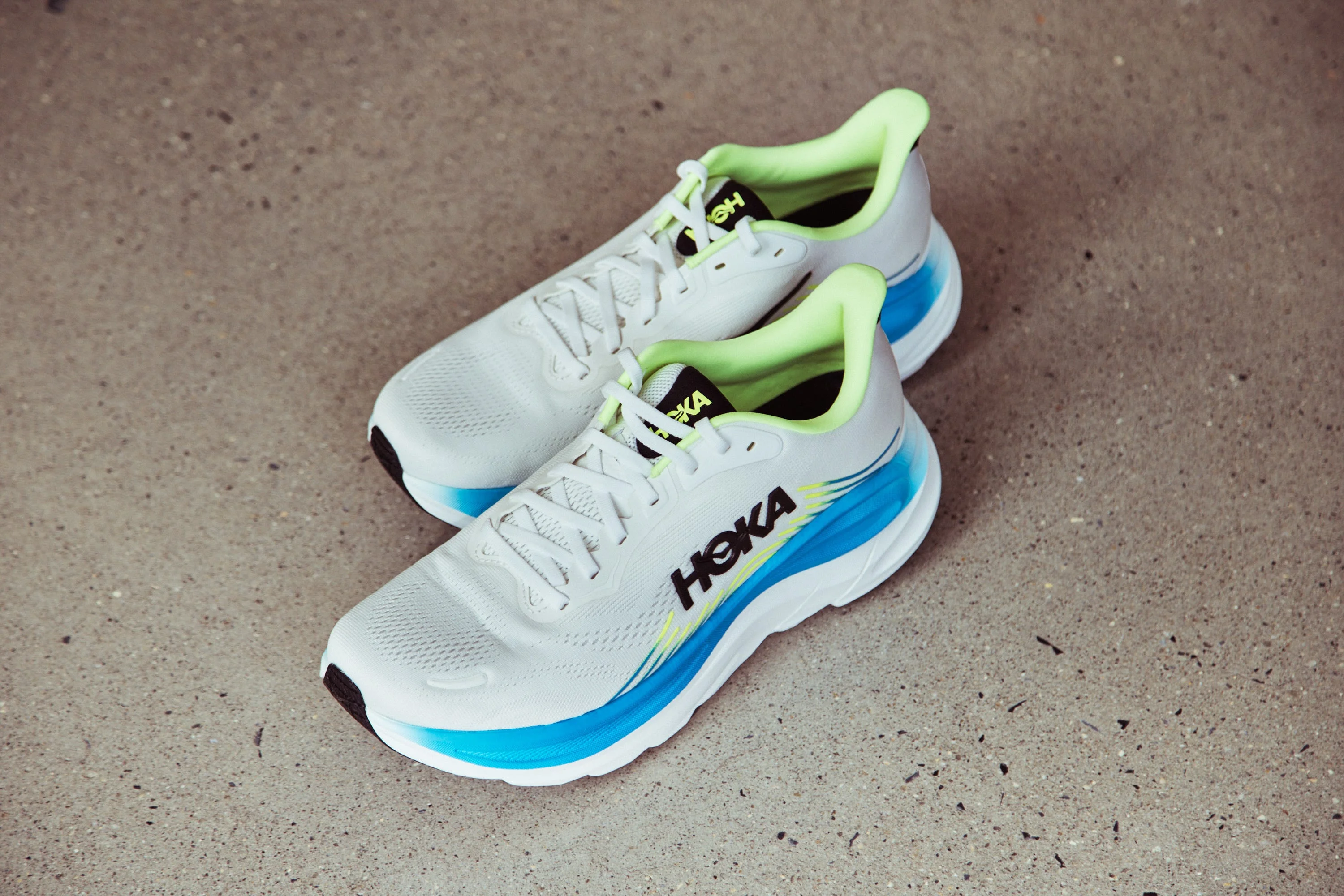
The shoe has compression-molded EVA foam (CMEVA), which isn’t as responsive as more dynamic foams out there like Hoka’s very own supercritical ProGlide+ foam, featured in its newest version of the Clifton, the Clifton Pro. But CMEVA has its merits as a tried-and-true platform you can count on for daily training, walking, and recovering. It’s why we rank this shoe Best Overall.
Best Value: Hoka Rincon 5
Pros
- Lightweight without sacrificing cushioning
- Supportive and responsive CMEVA foam
- Podular outsole handles grip
Cons
- Not as responsive as shoes with supercritical foams
Key Specs
| Weight | 9.7 oz |
| Drop | 8 mm |
Pros
- Lightweight without sacrificing cushioning
- Supportive and responsive CMEVA foam
- Podular outsole handles grip
Cons
- Not as responsive as shoes with supercritical foams
Key Specs
| Weight | 7.7 oz |
| Drop | 8 mm |
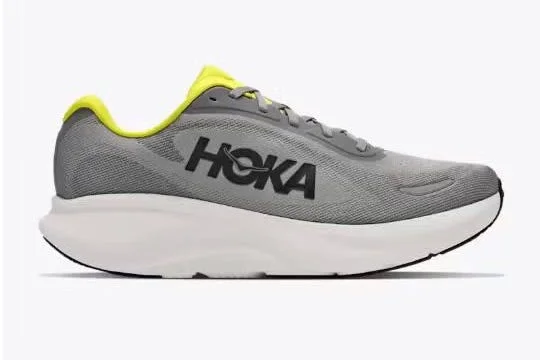
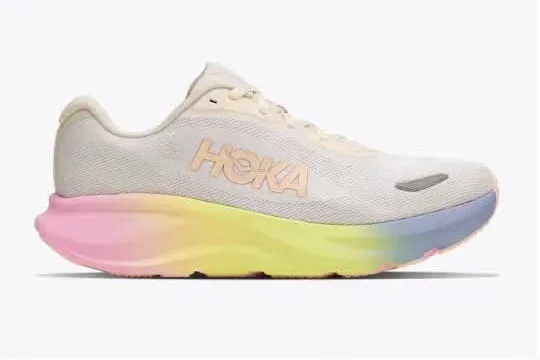
The Rincon 5 is a lightweight Hoka trainer that’s just as cushy as the Clifton. The shoes share the same midsole foam, CMEVA, only the Rincon is ounces lighter and a good pick for daily training and speedwork.
Don’t be afraid to turn sharp corners on a wet track; the podular outsole is made to grip wet, slick roads without causing you to break—because of a slide or fall—during a fast workout. The Meta-Rocker helps with quick turnover but isn’t too exaggerated for walking. The Rincon 5 is our Best Value pick because of its versatility.
Best Lightweight Trainer: Hoka Mach 7
Pros
- Lightweight
- Responsive supercitically-foamed midsole
- Rocker profile promotes smooth heel-toe transitions
Cons
- Cushioning too firm for some
Key Specs
| Weight | 8.4 oz |
| Drop | 5 mm |
Pros
- Lightweight
- Responsive supercritically-foamed midsole
- Rocker profile promotes smooth heel-toe transitions
Cons
- Cushioning too firm for some
Key Specs
| Weight | 7.2 oz |
| Drop | 5 mm |
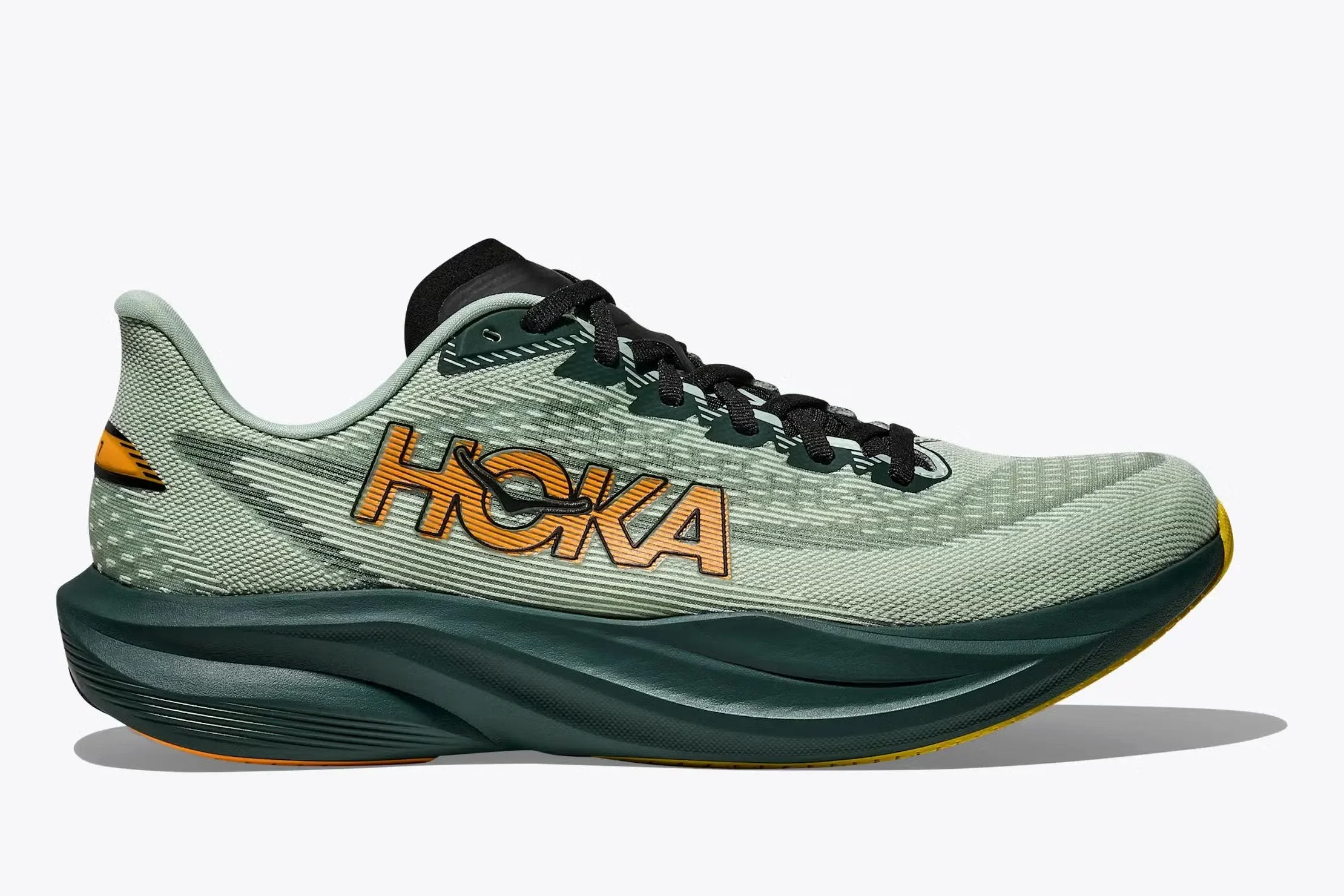
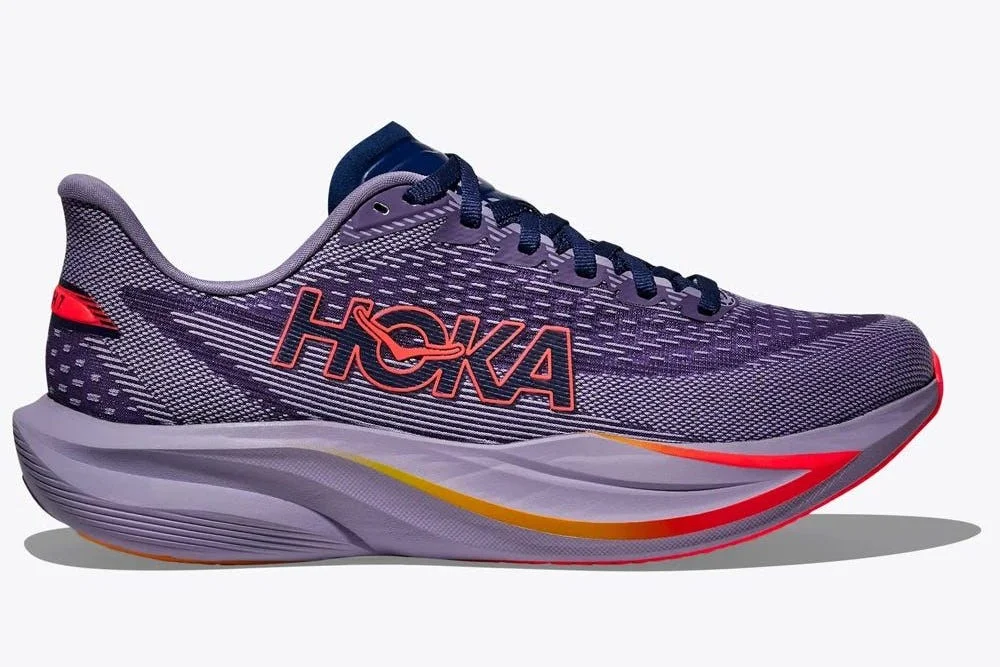
The Mach is known for going against our perception of what a Hoka should be: maximally soft and high-stacked. The seventh iteration has that same snappy ride runners know and love about the franchise. The real updates are the Mach 7’s look and fit.
The Hoka team refined the creel jacquard upper, making the shoe more breathable with a locked-in fit. The thin tongue is gusseted and notched in the middle for a more secure lacing system. It also looks sportier than its predecessor, with geometric angles on the upper and midsole.

The ride feels a little firm; supercritically-foamed EVA provides support but doesn’t have that plush cushioning like the Bondi and Clifton on this list.
This trainer is for runners who prefer a road shoe with more ground feel yet just the right amount of support to absorb shock. Wear the Mach 7 for daily runs or speed days when you want to push the pace.
Best for Long Runs: Hoka Skyward X 2
Pros
- Great stability
- Lots of cushioning
Cons
- Not built for speedwork
Key Specs
| Weight | 11 oz |
| Drop | 5 mm |
Pros
- Great stability
- Lots of cushioning
Cons
- Not built for speedwork
Key Specs
| Weight | 9.1 oz |
| Drop | 5 mm |
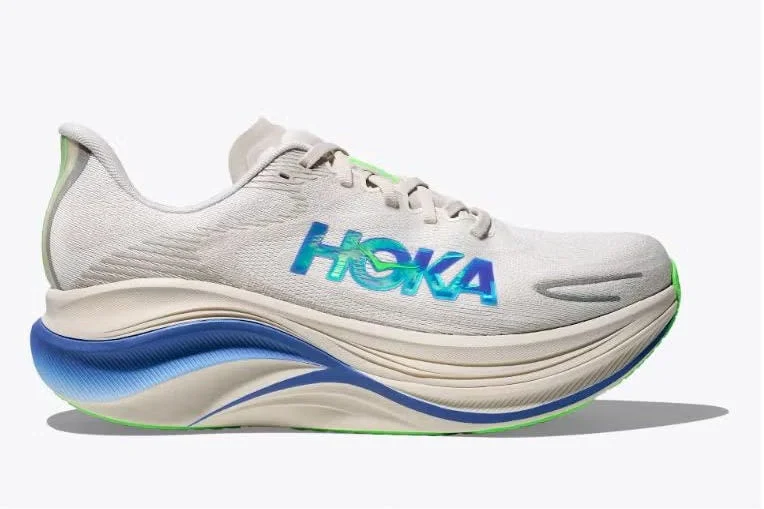
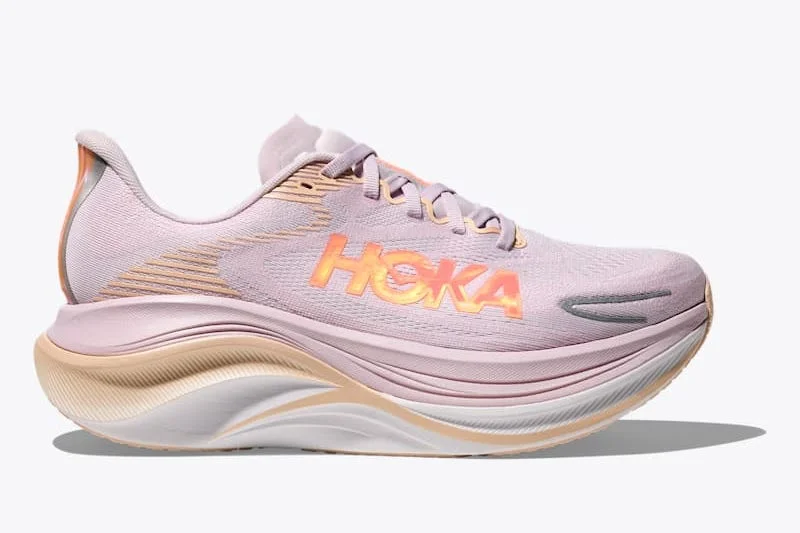
This super trainer provides a stable, cushioned ride packed with PEBA foam and a carbon plate. The second iteration is lighter than the original and has a new jacquard mesh upper for max-comfort and breathability.
The Skyward X 2 is inspired by Hoka’s racing shoes, but it’s built for long, hard efforts, not for speed. Our editor, Monique LeBrun, appreciated the shoe’s broad platform and secure lacing. During testing, she mentioned she almost took a spill on an uneven grass area but the Skyward X 2’s stable build kept her upright. That’s high praise for a neutral shoe with a tall stack height.
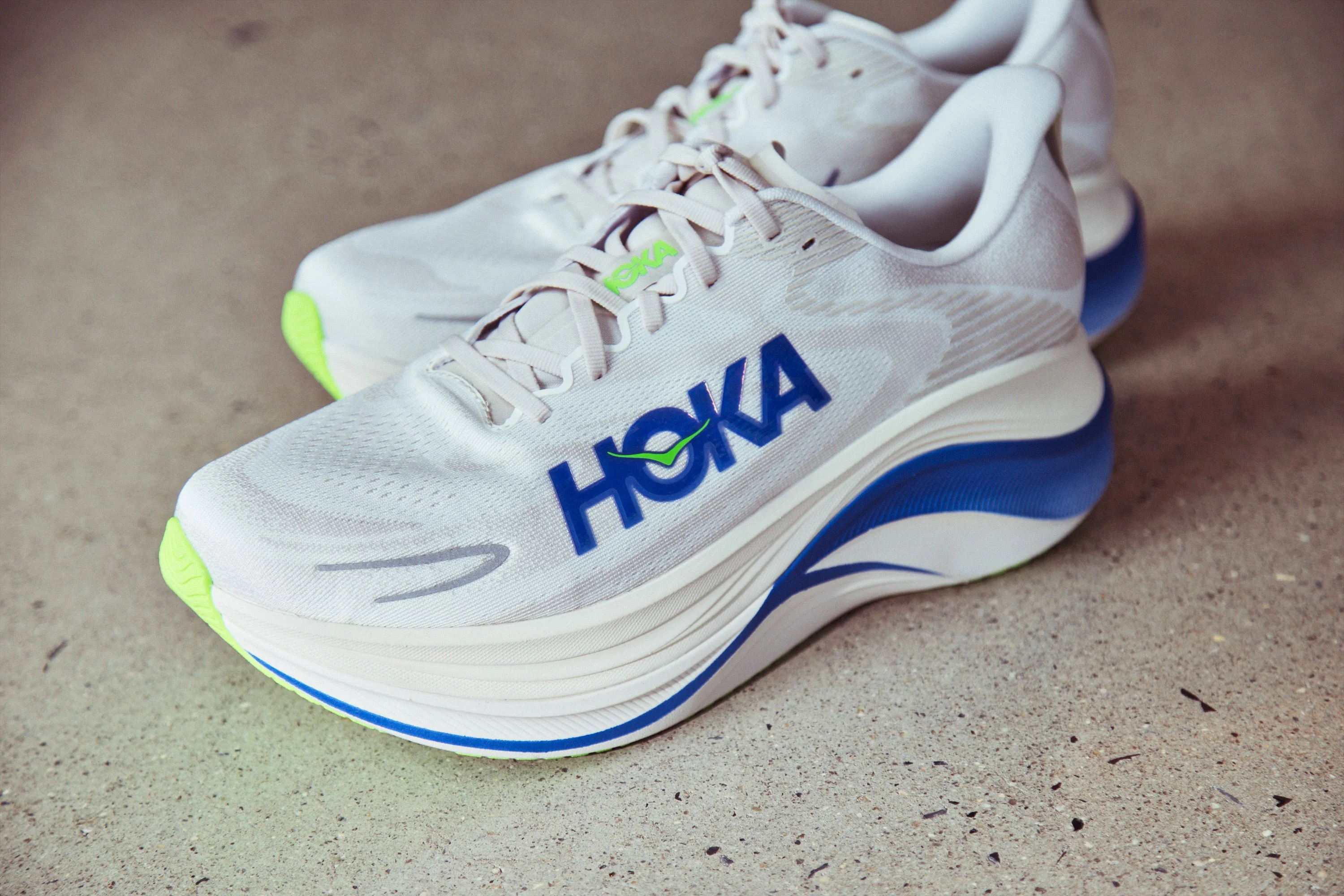
I also took the shoe out on a rail trail and marveled at its high energy return, even on packed dirt and a sandy route.
Best for Stability: Hoka Arahi 8
Pros
- Softer midsole than before
- Wide toebox
- More flexible than before
Cons
- Wide on narrow feet
Key Specs
| Weight | 9.8 oz |
| Drop | 8 mm |
Pros
- Softer midsole than previous model
- Wide toebox
- More flexible than before
Cons
- Wide on narrow feet

Features at a Glance
| Weight | 7.7 oz |
| Drop | 8 mm |
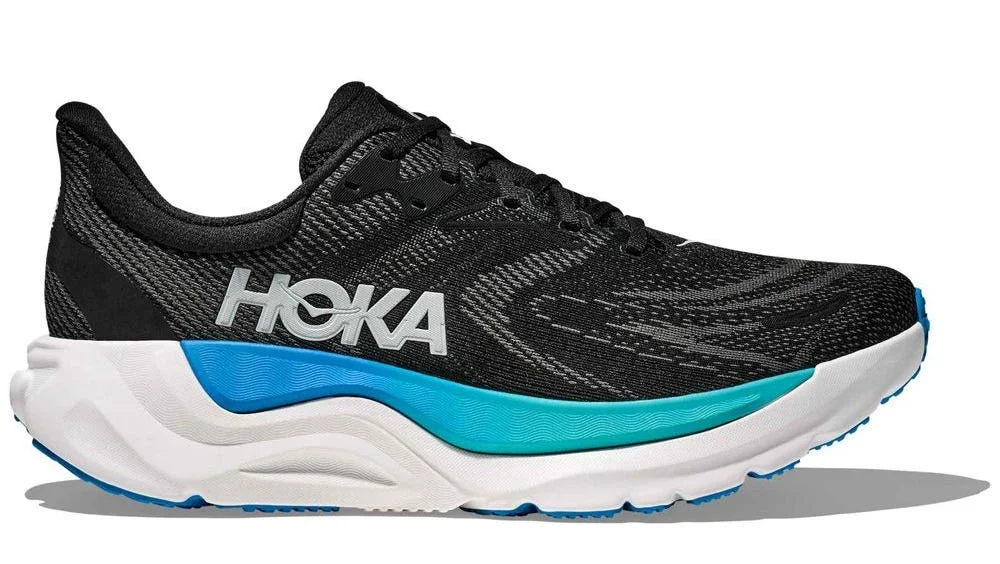
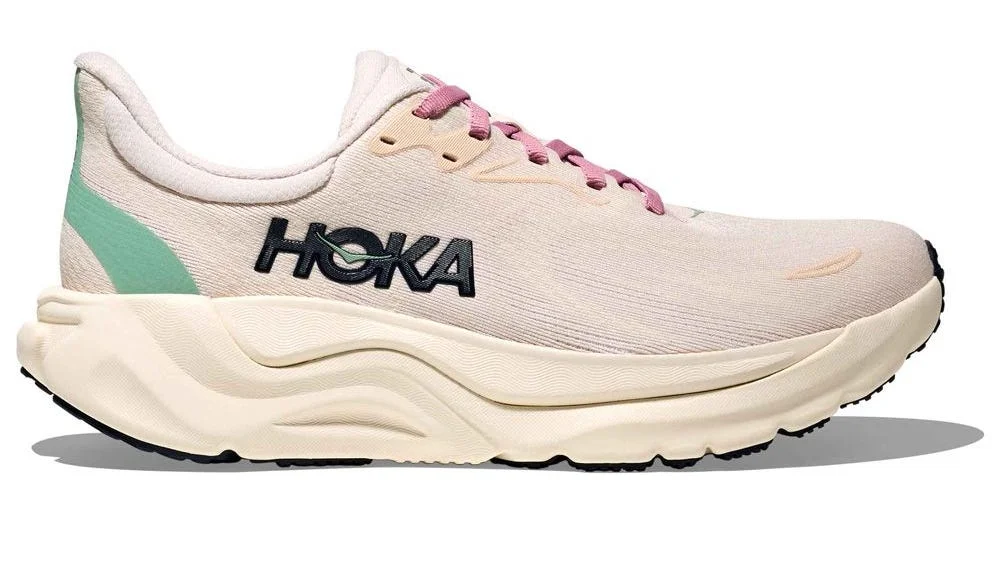
The all-new, improved Arahi feels softer and has a more accommodating fit. Testers of the Arahi 7 felt the shoe was a little lackluster in energy return, due to the firm, stiff cushioning. They also desired more toe room, feeling the fit was too narrow. The Arahi 8 remedies these issues with retooled plusher dual density compression-molded EVA foam.
The Arahi 8 is a comfy fit on wide feet. As a wide-foot runner myself, I was impressed with just how different the shoe felt compared to its predecessor's narrower construction. While the fit may feel a touch loose for narrow-footed runners, it was a small compromise for the more flexible, cushier ride.
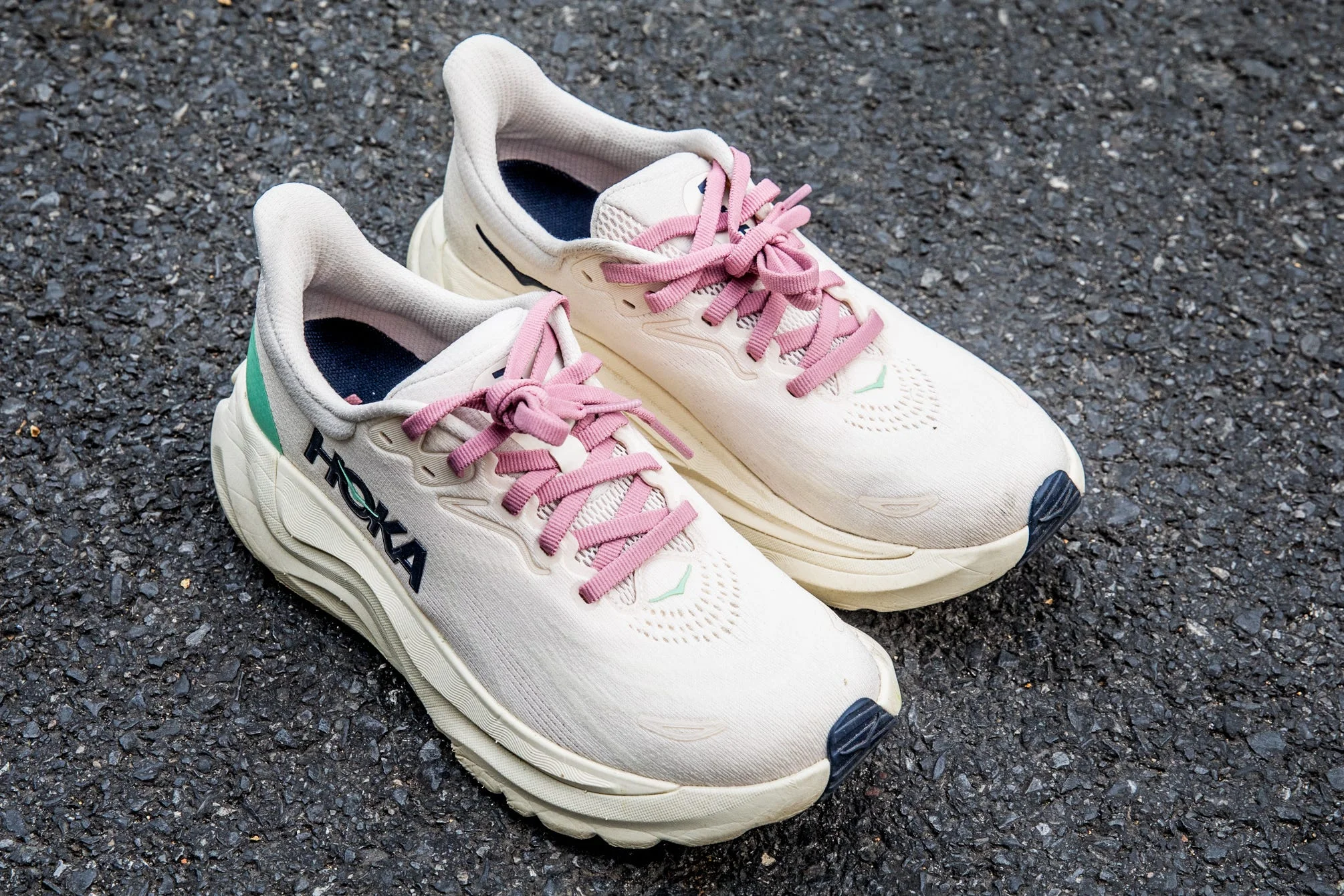
Another major update: Hoka replaced its J-Frame—denser foam that begins on the medial edge of the shoe and wraps around the heel in the shape of a J—with the H-Frame. The H-Frame is firmer H-shaped foam embedded into the midsole of the Arahi 8 to counter excessive overpronation (when your feet tend to roll inward more than 15 percent). Instead of making the shoe feel rigid and heavy, the H-Frame promotes smooth turnover in a relatively lightweight package—especially for a stability trainer.
Best for Racing: Hoka Cielo X1 3.0
Pros
- Hoka's lightest super shoe
- Redesigned midsole helps smooth transition
- Thin upper won’t hold water
Cons
- May be too thick and bouncy for some runners
- Floppy tongue bunches up when you put the shoe on
Key Specs
| Weight | 7.5 oz (M10), 6.2 oz (W8) |
| Drop | 7mm |
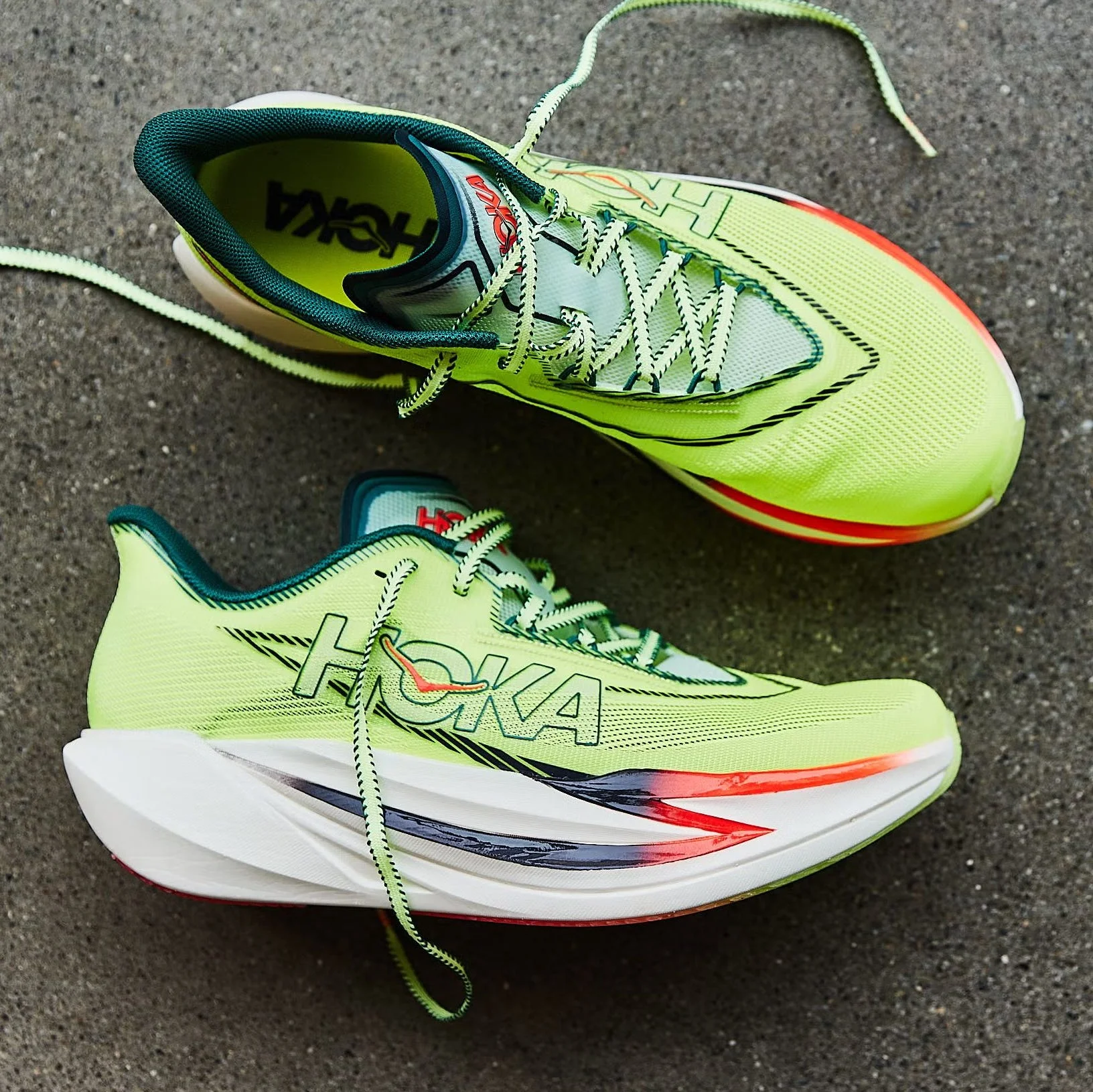
A blackout prototype of the Hoka Cielo X1 3.0 made an appearance at the Chicago Marathon last October, where Alex Masai podiumed after running 2:04:37, taking third place. This underscores how special the third iteration is of Hoka’s fastest shoe.
The Cielo X1 3.0 is even lighter than its predecessor. Hoka shaved off half an ounce and changed the midsole geometry. Instead of an exaggerated rocker, Hoka flattened the sole to provide more stability. Testers liked this change, finding more control in their ride.

“The 3.0 is sturdier than the 2.0,” said shoe tester Mike Browne, a sub-3 marathoner and head track coach at a local high school. “I’m referring to the sturdiness mainly on heel strikes. I wore the 2.0 during marathon training and in a marathon, and they actually underpronated a little. I think that is what caused the outside heel rubber to come off on both shoes. The 3.0 has corrected that issue and seems to strike the ground in the center, which makes for a more even wear on the shoe.”
Best for Long Runs: Hoka Bondi 9
Pros
- 10mm plusher than before
- Sleeker profile
Cons
- Narrower fit than previous versions
Key Specs
| Weight | 10.5 oz |
| Drop | 5 mm |
Pros
- 10mm plusher than before
- Sleeker profile
Cons
- Narrower fit than previous versions
Key Specs
| Weight | 9.3 oz |
| Drop | 5 mm |
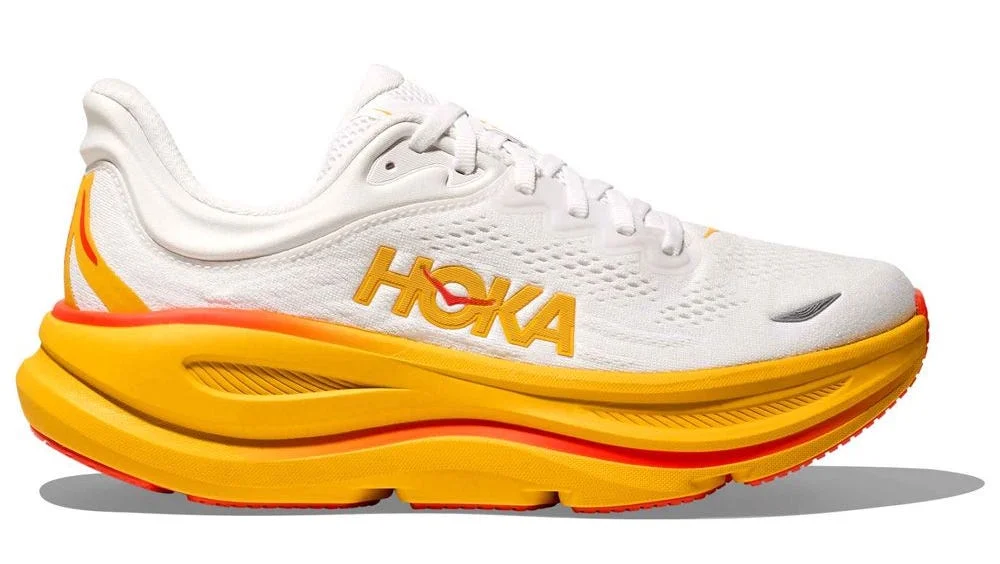
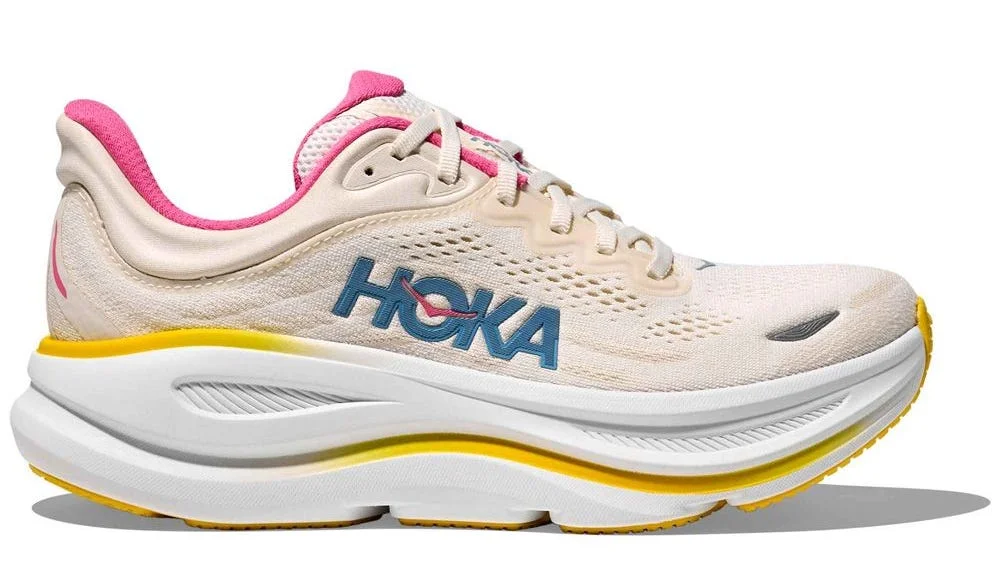
If there’s one shoe that screams Hoka, it’s the Bondi. The trainer is quintessentially Hoka for its max-cushioning and soft interior. The Bondi 8 came out three years ago, so we expected a major makeover with the Bondi 9 launched earlier this year. The latest version is 10mm thicker than its predecessor (the men’s Bondi 8 had a 33mm stack height). Though it towers over previous iterations, the Hoka team wanted to change was its “billowiness.” As a result, the Bondi 9 has a sleeker, more refined look compared to Bondis past.
While it wouldn’t be my first pick for speedwork, I tested the Bondi 9 running 100-meter and 200-meter intervals on the treadmill at 6:40 pace, and was surprised how smooth they glided on the belt. Other testers ran long in the shoe at a more modest pace. They described the feel as noticeably lighter than previous models and incredibly comfortable.
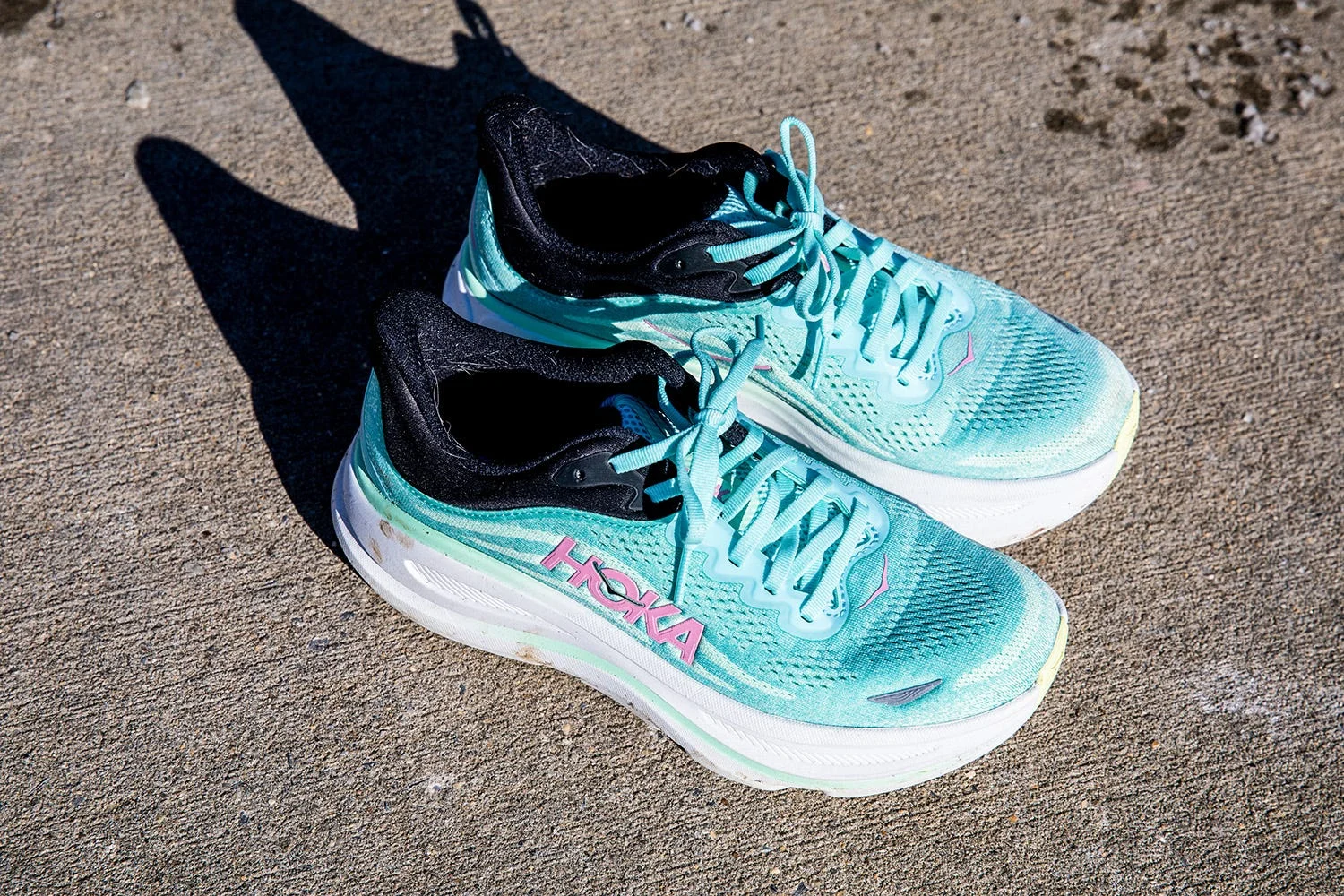
But Hoka could go even further with the Bondi 10: Testers wanted a thinner tongue and wider midfoot. Minor grousing amidst a lot of praise. Props go to tester John Mikovits for this honest take: “Hoka has been hit-or-miss for me but the Bondi, in general, has been a chunky miss. This Bondi 9 has broken the streak of disdain.”
Best Overall Trail: Hoka Speedgoat 7
Pros
- Softer midsole cushioning
- Durable for high mileage, ultra distances
Cons
- Runs short
Key Specs
| Weight | 9.7 oz |
| Drop | 5 mm |
Pros
- Softer midsole cushioning
- Durable for high mileage, ultra distances
Cons
- Runs short
Key Specs
| Weight | 8.3 oz |
| Drop | 5 mm |
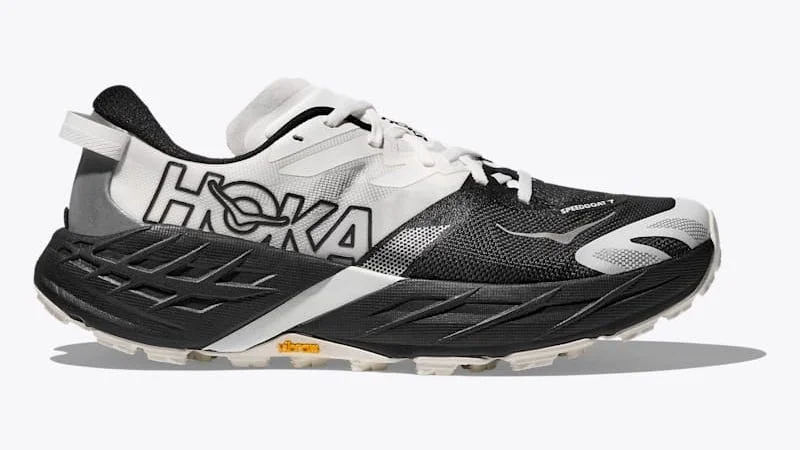
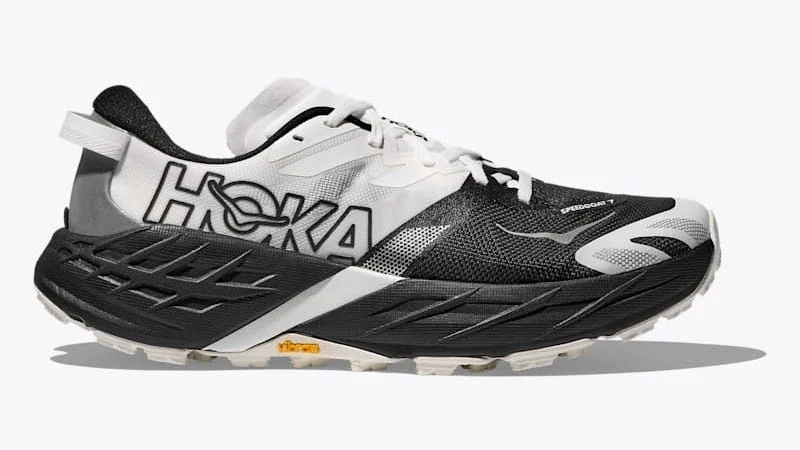
We love the ’Goat because it can handle any kind of trail. But not everyone welcomed the changes Hoka made with the sixth iteration. The shoe team addressed these issues, making the Speedgoat 7 the ’Goat you remember.
The formerly compression-molded EVA midsole is now super-critically foamed EVA, a softer blend with a familiar feel. It’s inspired after the Speedgoat 5’s foam, which our testers described as “just right” and “would feel amazing at mile 50+.”
The 5mm lug design is adjusted for mixed terrain. It’s even more trail-ready with gaiter attachment points, a flat dual-gusset tongue for a secure fit that keeps trail debris out, and heel tab to help with entry and attach to a carabiner on your bag.
The Speedgoat 7 is durable and padded with protective cushioning for runners embracing the ultra life.
Best for Trail Racing: Hoka Tecton X 3
Pros
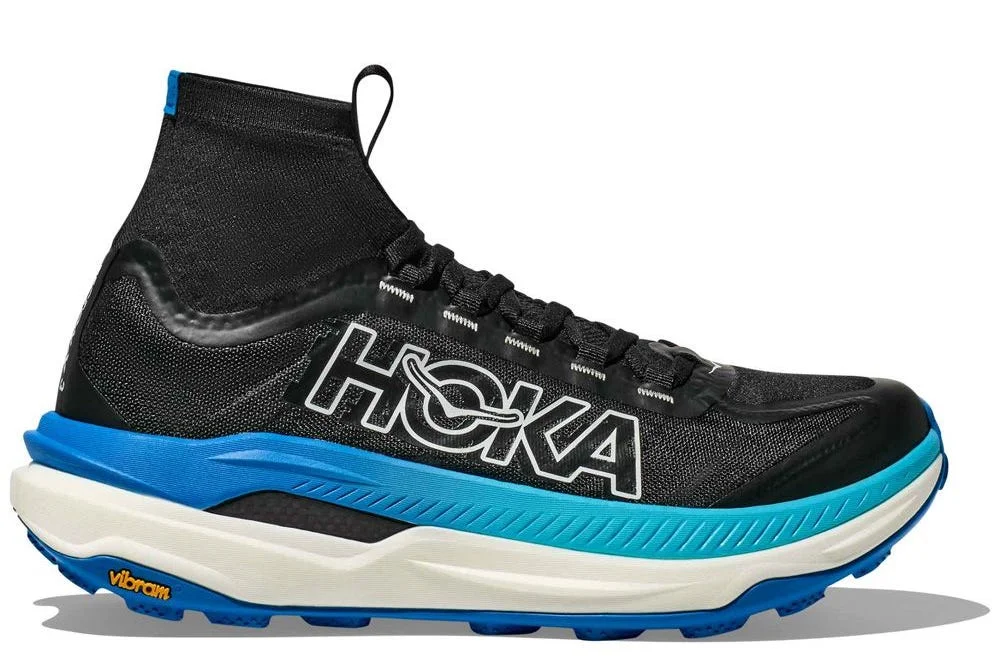
- Abrasion-resistant Matryx upper
- Responsive PEBA cushioning
Cons
- Sock-like gaiter caused rubbing and gathered sweat for some testers
Key Specs
| Weight | 10 oz |
| Drop | 5 mm |
Pros
- Abrasion-resistant Matryx upper
- Responsive PEBA cushioning
Cons
- Sock-like gaiter caused rubbing and gathered sweat for some testers
Key Specs
| Weight | 7.9 oz |
| Drop | 5 mm |
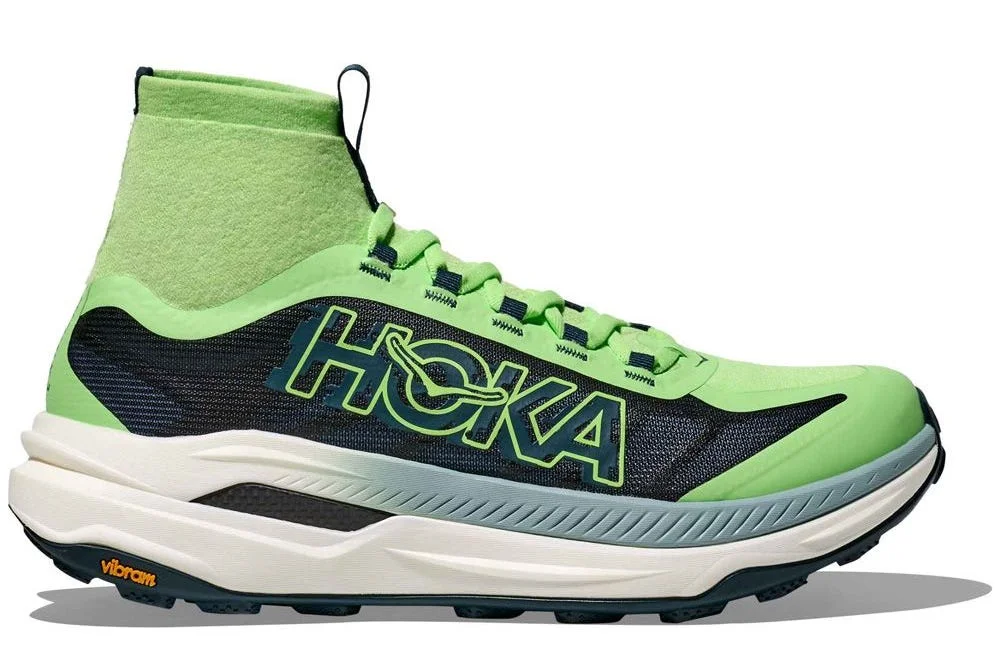
In the Tecton X 3 you have the best of both worlds: You get super-shoe-grade PEBA foam with parallel carbon plates, and an abrasion-resistant Matryx upper for challenging pursuits. Hoka added “winglets” to the plates, creating more stability in the cushy midsole. The lugs also have an updated shape for grippier traction.
Testers praised the comfort and lightweight feel of the Tecton X 3. “They were just plush enough for some longer miles,” said wear-tester Kelly Ammon. “I topped out at 15 miles, but based on the cushioning, I could easily see myself wearing them for at least a 50k but maybe even longer. They felt fast and responsive like the La Sportiva Prodigios I just tested but were much more comfortable for distance.”
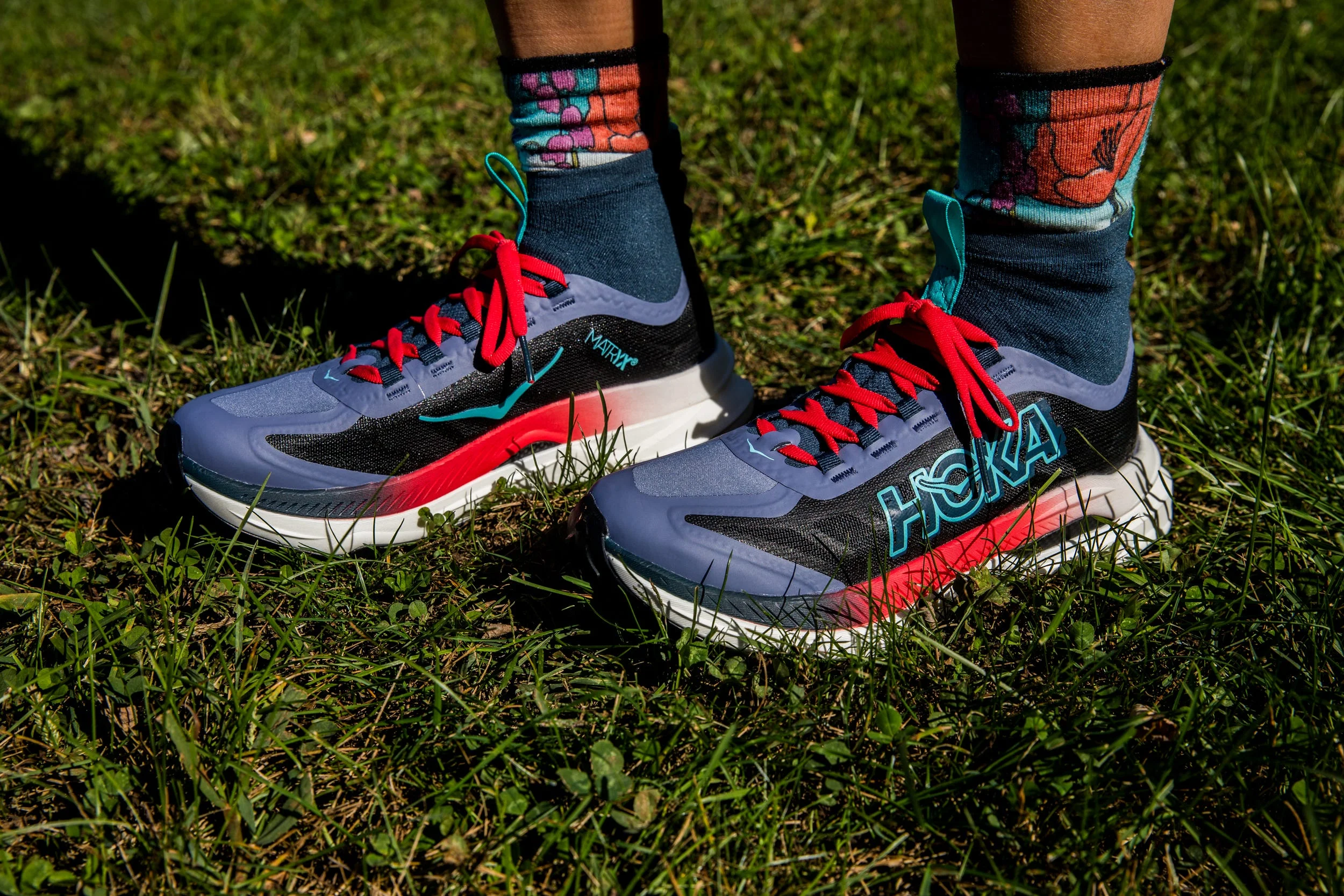
The sock-like gaiter was a divisive feature amongst testers. Some liked the built-in protection and how it prevented pebbles and dirt from creeping in. Others said the sock caused rubbing when they wore short socks and disliked how their ankles felt swampy overtime due to the collected sweat.
Best for Ultras: Hoka Mafate X
Pros
- Wide, roomy toebox great for toe-splaying
- Soft, supportive ride over long stretches of technical trail
Cons
- Chunky; heavy for some testers
Features at a Glance
| Weight | 12.1 oz |
| Drop | 7 mm |
Pros
- Wide, roomy toebox great for toe-splaying
- Soft, supportive ride over long stretches of technical trail
Cons
- Chunky; heavy for some testers
Features at a Glance
| Weight | 8.3 oz |
| Drop | 5 mm |
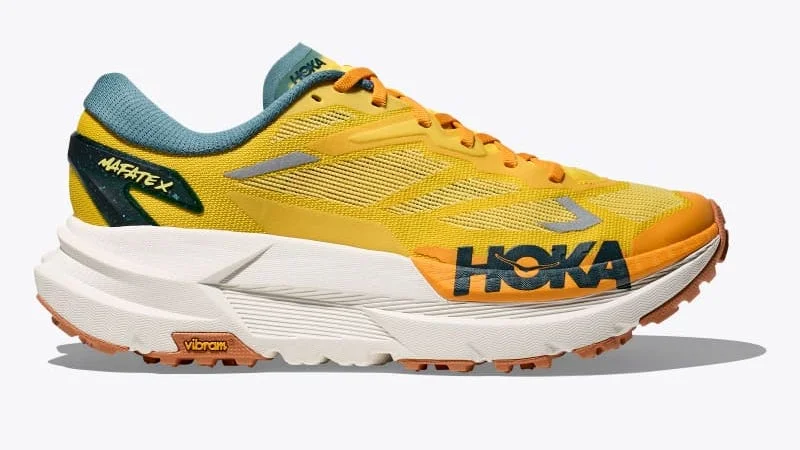
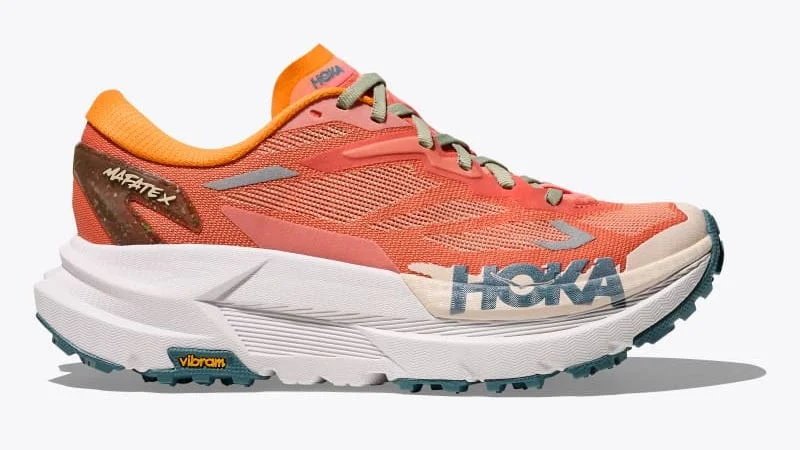
The Mafate X is an ode to Hoka’s earliest, most loyal fans who knew this max-cushioned shoe brand had something special to offer before it went mainstream. The Mafate X celebrates Hoka’s ultra roots; the outsole’s tread is patterned with tacos and pizzas, which is a nod to the beloved fuel ultrarunners chow on midrace.
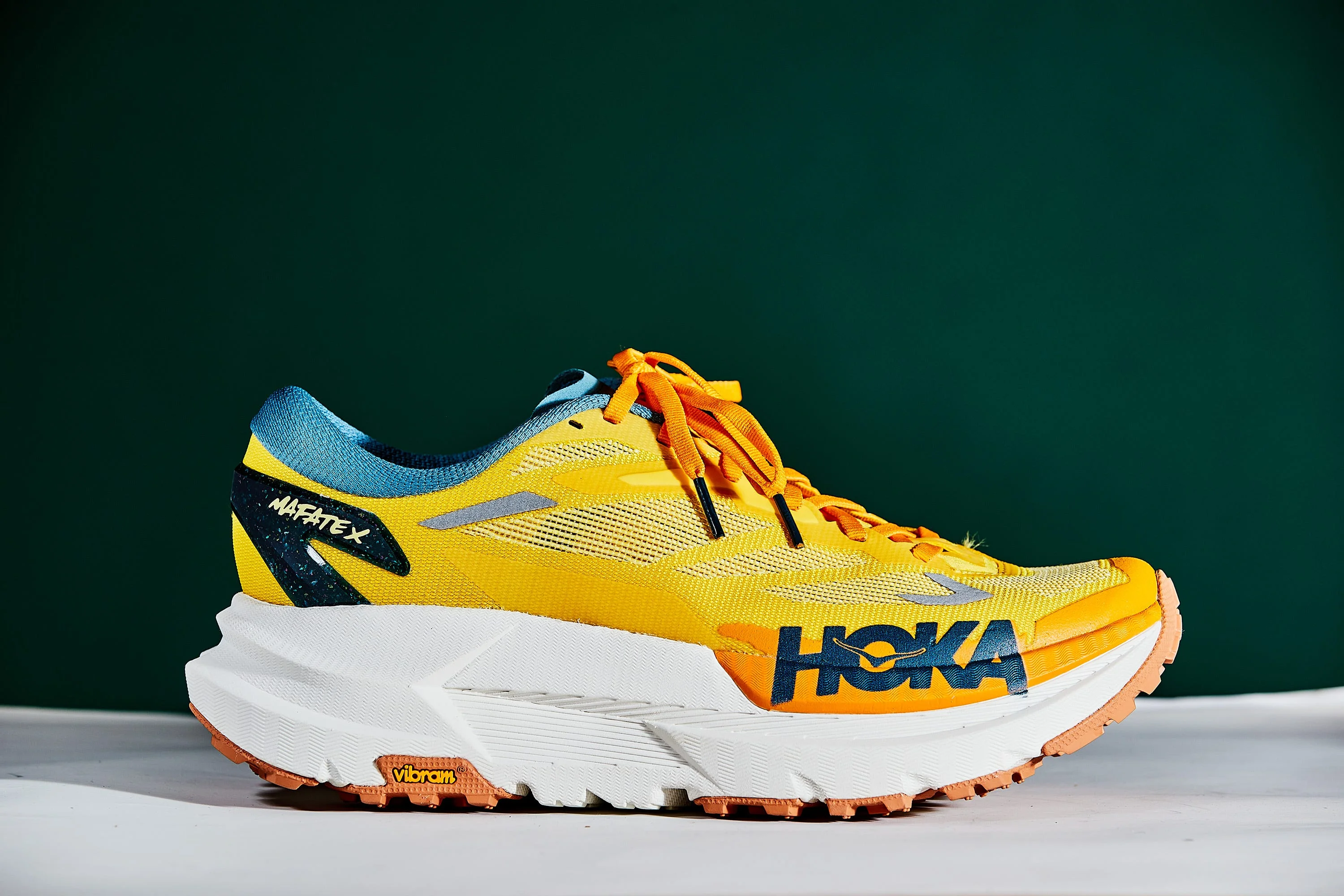
The shoe’s a chonk though. The heel height reaches 49mm, and that massive midsole—PEBA core, supercritical foam EVA carrier—can be a little much for some runners of small stature (i.e., me). I was the minority, however, when it came to shelving this trainer after a couple of runs (you can’t love ’em all). Our testers, on the other hand, raved over the Mafate X. They praised the comfy fit, accommodating wide toebox, and thick protective foam underfoot.
“This is the best Hoka trail shoe,” said tester Sean O’Connor, comparing the shoe to the Hoka Challenger 3. “The first thing I noticed was how soft the foam has gotten. I have said in multiple reviews that the foam in Hoka shoes has fallen behind the times. In the Mafate X, the foam is right on point. It is soft. It is protective. And, most importantly, it is fun to run in.”
What To Consider
Q+A
Become a Stronger Runner With These Exclusive Training Programs






Amanda Furrer, Editor, Running Reviews, studied journalism at NYU and writing at Emerson College. She has reviewed gear and covered other topics in the running space for almost 10 years. Since 2013, she has consecutively run the Boston Marathon. She also has a master’s degree in gastronomy from Boston University and was formerly a professional baker for two years before hanging up her apron.

Cat Bowen, senior editor of commerce; reviews, is a seasoned runner with more than 20 years of distance running experience, including dozens of marathons, half marathons, and even a few ultra marathons. For over a decade, she has tested parenting, fitness, home, and running gear and written in-depth guides to help readers with their next purchase. Holding multiple advanced degrees and currently studying kinesiology, Cat Bowen brings research-backed insight to all of her guides. Passionate about women’s health and neurodivergent inclusion, she advocates for closing research gaps and helping others—especially AudHD people—find joy in running and fitness.
