I was extra proud to PR by almost eight minutes at the 10-mile Broad Street Run in Philadelphia earlier this spring and finish in 1:19:51. I had hoped for some level of improvement, since it was only my second time racing that distance, but I had set my expectations low—after all, I wasn’t wearing a full-length overcoat, wire-rimmed bifocals, and a bald cap the first time around.
In fact, every single race I’ve run thus far in 2026 has been in some sort of costume. What started as a combination of peer pressure, team spirit, and same-day shipping has reignited my enthusiasm for racing after pressure to hit my goals displaced the fun.
I've learned that when done right, running in costume can bring joy, laughter, and finish-line photos that are well worth the astronomical fees. When done wrong, though, you might feel phantom pain from the chafing for years to come.
Here, I share my hard-earned wisdom so you can join in on the fun and race in a costume yourself.
Match the Costume With the Goal
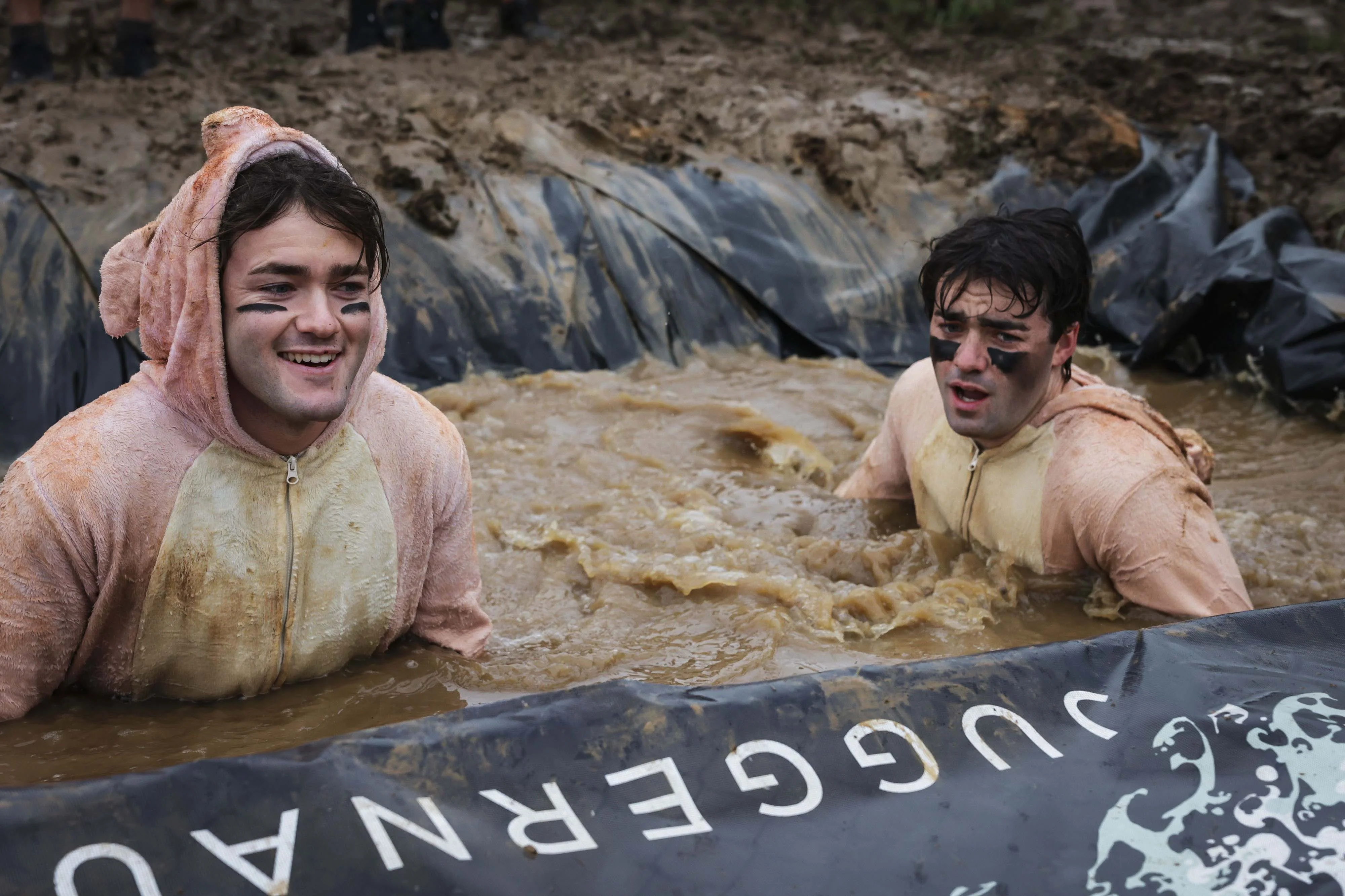
Make sure you’ll be able to run in the costume of your choosing no matter what the race throws your way. I learned this lesson the hard way while dressed as one of the three little pigs during the Philly Mud Run: After emerging from the first of many water obstacles, our team learned the flannel onesies soak up water like a sponge, adding more than 15 pounds of weight for us to carry. We still finished the 15K strong, albeit with a handful of walking breaks mixed in to give our knees a break.
Though you can’t know exact race-day conditions, make sure to consider the weather or race-course obstacles. A costume that’s not suitable for certain temperatures can doom even the shortest of races. During my neighborhood’s Fourth of July parade a couple of years ago, the Phillie Phanatic mascot had to be rushed off the 1.5-mile course due to heat exhaustion. And they weren’t even running—they were just riding in a golf cart!
Do a Trial Run
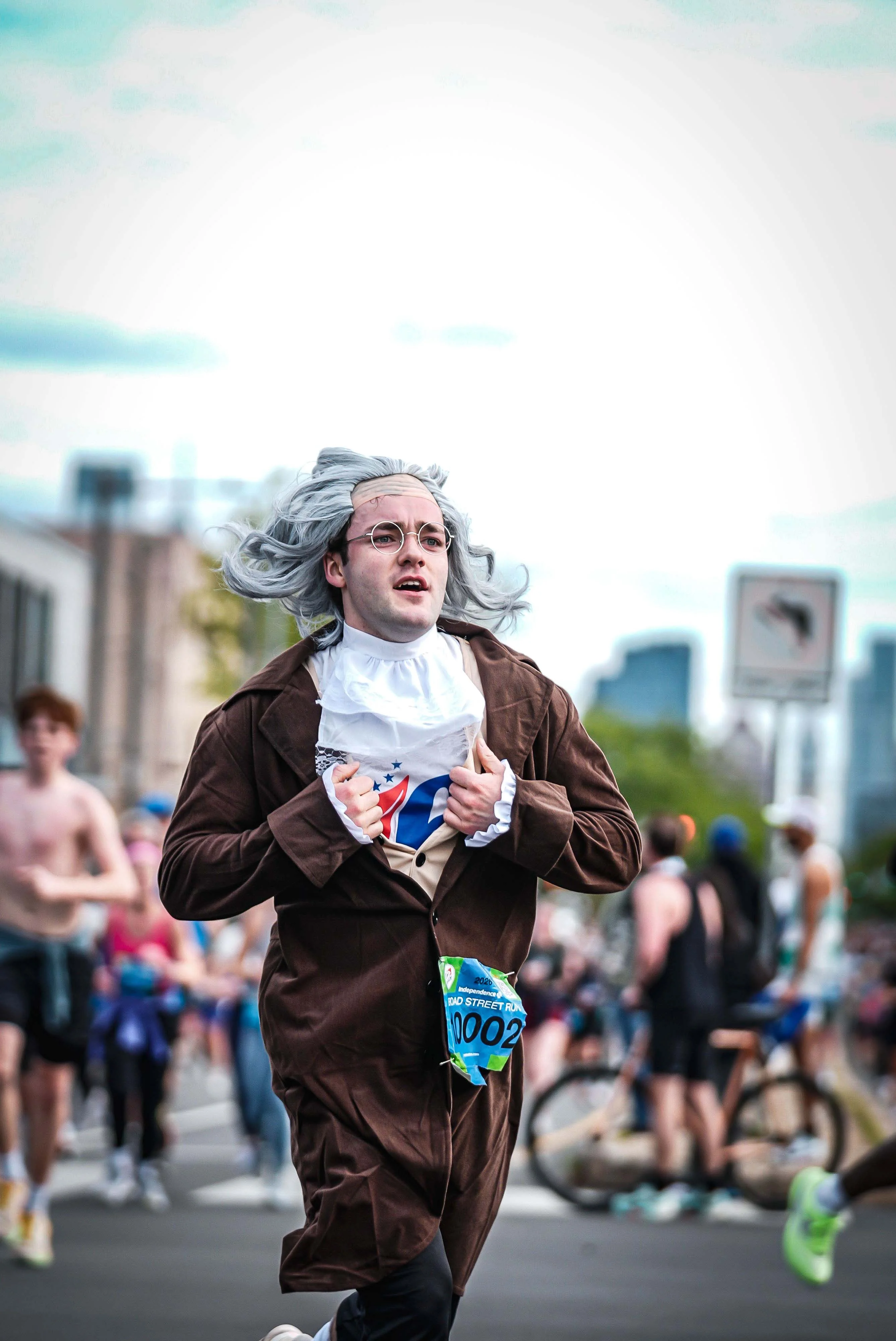
Taking the full kit for a practice run is the best way to simultaneously perplex your neighbors and pinpoint any potential problems ahead of time: Will that hat stay on your head at race pace? Do the pants restrict leg movement at all? Does the costume come with any secure storage, or are the pockets just for show? By taking my Ben Franklin costume for a spin a couple of days before the Broad Street Run, I learned that the ruffled fabric around my neck would fly up and hit me in the face every 30 seconds. Using a safety pin to keep it in place prevented what would have been a certain irritant during the race. For maximum effectiveness, practice runs should have everything you plan on wearing on race day—down to the exact accessories. You don’t want to find out on the starting line that your socks keep falling down.
Stay Ahead of Chafing
Friction is a risk in regular running gear, and it’s safe to say that most costumes aren’t designed with fabrics meant for elite running performance. Without proper preparation, you’re asking for a chafing catastrophe. Apply however much anti-chafe ointment you think is overkill, then add some more. Your body will thank you.
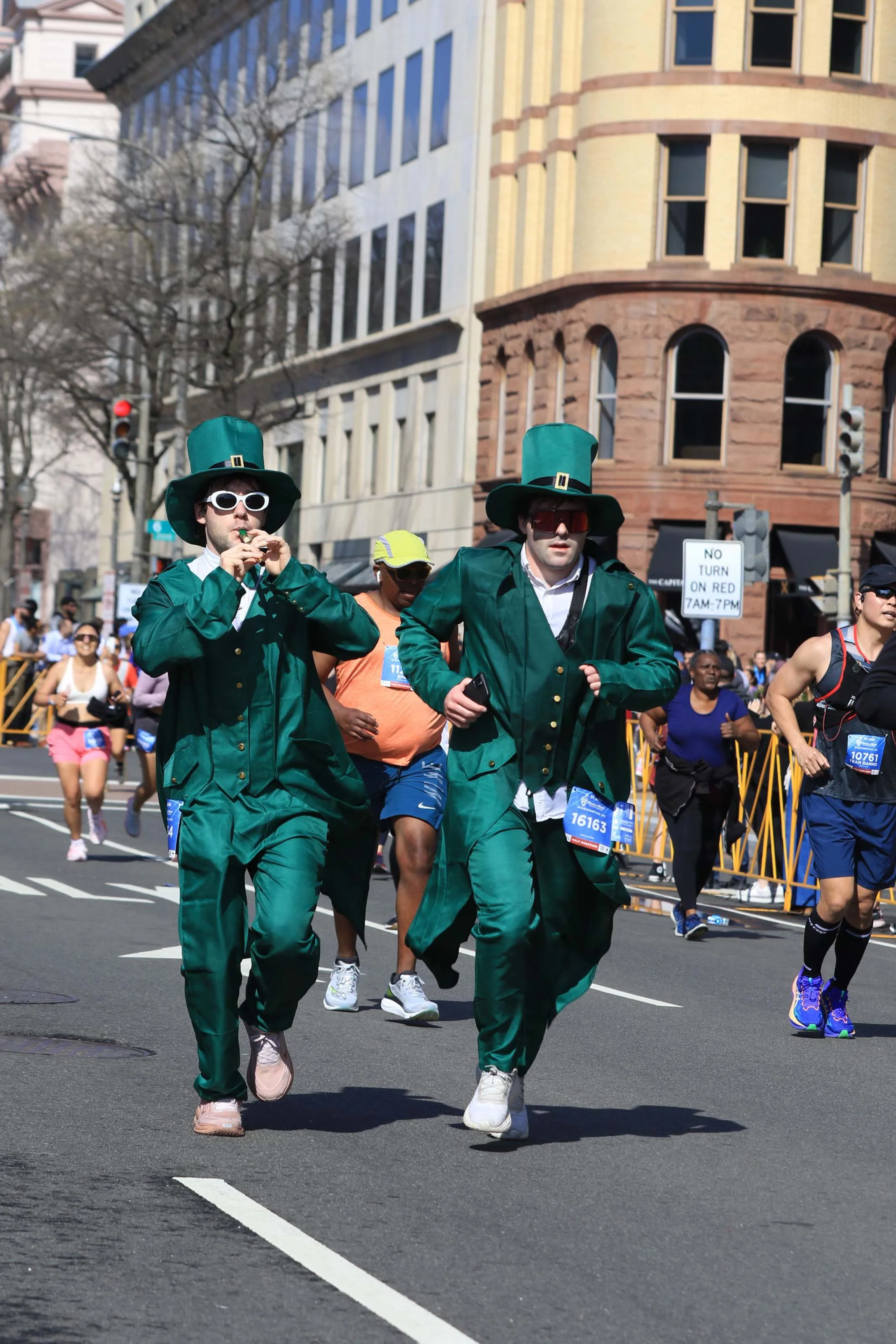
During the D.C. Rock ‘n’ Roll Half Marathon in March, when my brother and I celebrated Saint Paddy’s Day in leprechaun costumes, I went a step further and wore a base layer of performance gear. Sure, having my go-to pair of compression shorts underneath the polyester suit pants made my legs a tad warmer, but it guaranteed my skin came out of the race irritation-free.
Don’t Sacrifice the Shoes
It may be tempting to maintain accuracy by wearing a pair of boots, clogs, or sandals to complete your outfit, but improper footwear can have dire consequences.
As long as you have a solid pair of sneakers on your feet, you can wear almost anything and ultimately finish the race. Consider my experience during the mud run: Despite the flannel pig suit adding extra weight when soaking wet, I actually felt more prepared than most participants, thanks to the pair of Norda 005s I was testing at the time. The premium trail shoe provided ample comfort, cushion, and traction through the rainy obstacles. During a steep, mud-covered decline through the woods where people were holding onto branches to avoid falling, I was able to waltz downhill with barely any change to my form or speed.
Be Ready to Adapt
Even the best plans can go awry during a race, so be prepared to adjust your strategy and expectations. Around mile 10 of the leprechaun half marathon, my brother made the smart call to ditch his green top hat, which had been collecting literal puddles of sweat inside, to avoid passing out from the heat.
These changes can add fun, too. The morning of the Broad Street Run, I swapped out the performance tee for a cotton Philadelphia 76ers shirt to celebrate their Game 7 playoff win over the Boston Celtics the night before. That addition, which I made sure was visible through the overcoat and vest, got me more cheers than the Ben Franklin costume itself.
Embrace the Joy
Costumes are not for breaking PRs (though it can happen), so lean into the fun: get the crowd going, stop for a picture, break out a prop or two if you’re able. During a silent uphill stretch that was free of spectators in the leprechaun half marathon, I broke out the tin whistle I’d brought along to play the first couple of lines of “Concerning Hobbits,” from The Lord of the Rings movies, prompting some laughs and a “Keep going, Mr. Frodo!”


Michael McDonough joined Popular Mechanics, Runner’s World, and Bicycling in November 2024. He loves the variety of subject matters that comes with his work—as a former contributor to Encyclopedia Britannica, he’s previously written about topics in statistics, psychology, and more. A former sprinter, he’s currently working his way up to longer distances with the encouragement of his coworkers.
